

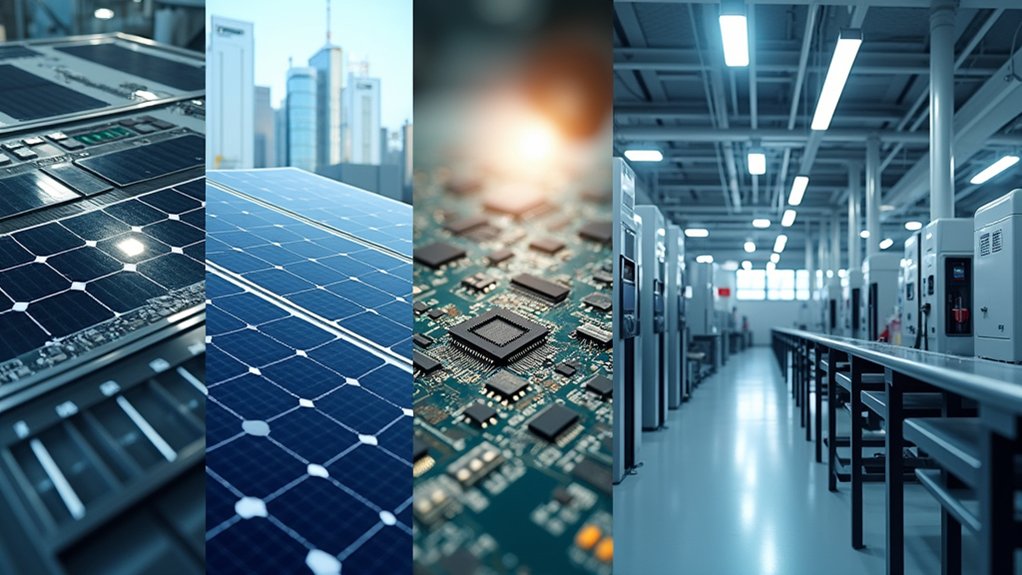
We’re witnessing an unstoppable silver demand driven by the green tech revolution and industrial innovation. Silver’s unmatched conductivity makes it essential for solar panels, electric vehicles, and advanced electronics – with industrial consumption hitting record highs of 680 million ounces in 2024. Supply constraints from limited mining output and declining ore grades can’t keep pace with exponential demand growth. The convergence of green energy, electronics, and medical technologies guarantees silver’s critical role will only intensify.
The Green Tech Revolution Driving Silver Consumption
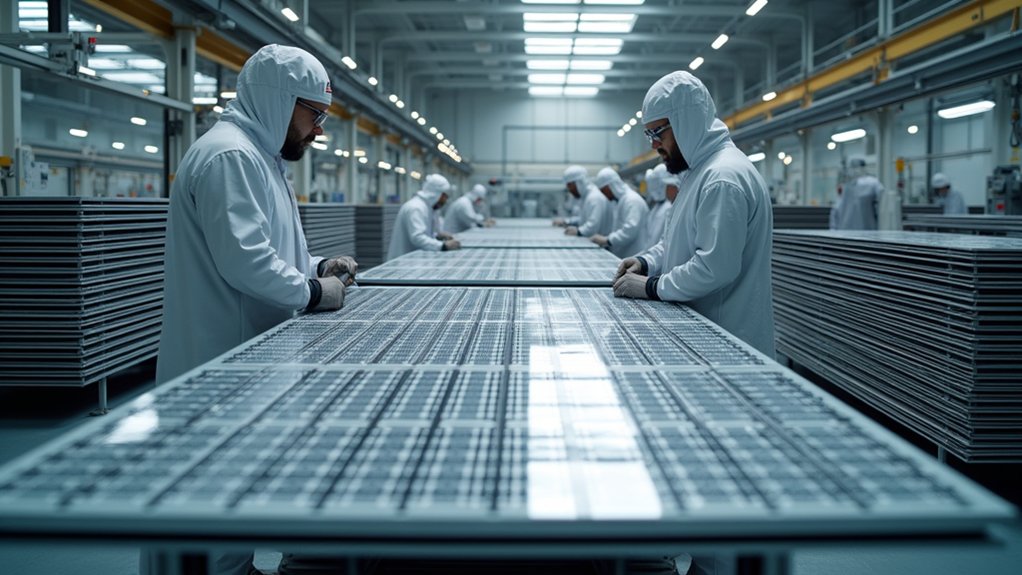
As the world accelerates its shift to renewable energy and sustainable technologies, silver’s unique properties have positioned it at the heart of the green tech revolution.
We’re witnessing unprecedented demand for this versatile metal, driven by two transformative forces: solar innovation and electric mobility.
In the solar sector, silver’s unmatched electrical conductivity makes it irreplaceable in photovoltaic cells, while EV manufacturers rely on it for everything from motors to batteries.
Even as engineers work to optimize silver usage per unit, the sheer scale of green tech adoption keeps pushing demand higher. Modern wind turbines require 200-400 kg of silver for their essential control systems and sensors.
Government initiatives worldwide, like the EU’s ambitious REPowerEU Plan and the U.S. Federal Sustainability targets, are turbocharging this trend.
This sustained momentum has led to record-high industrial demand for the fourth consecutive year.
Simply put, silver’s superior physical properties make it the cornerstone of our sustainable future – and there’s no turning back.
Breaking Down Record-Breaking Industrial Demand
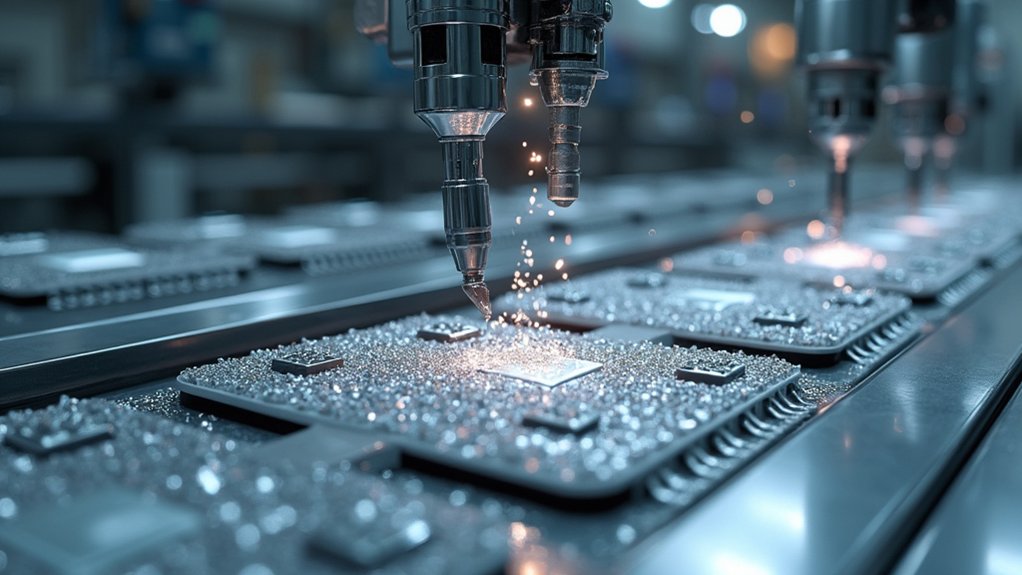
The industrial demand for silver has shattered all previous records, reaching an unprecedented 680 million ounces in 2024 and showing no signs of slowing down.
Industrial silver demand has exploded to historic levels, with 2024 consumption reaching 680 million ounces amid relentless growth.
Let’s examine the industrial consumption trends driving this surge – electronics, medical applications, and emerging technologies now account for 59% of total silver use, up from 50% a decade ago.
We’re seeing remarkable growth in silver demand forecasts through 2025, with industrial consumption expected to hit 677 million ounces.
This represents a 38% increase from 2016 levels, creating persistent market deficits averaging 200 million ounces annually.
The squeeze is real – COMEX warehouse stocks have plummeted by over 70% since 2020, while supply remains constrained since 70% of silver comes as a byproduct of base-metal mining.
The market transformation is particularly evident in the photovoltaic sector, which has emerged as the primary driver of increased silver demand.
Supply constraints are further exacerbated by permitting delays, capital intensity requirements, and declining ore grades at existing mines.
Supply Constraints in a Technology-Driven Market
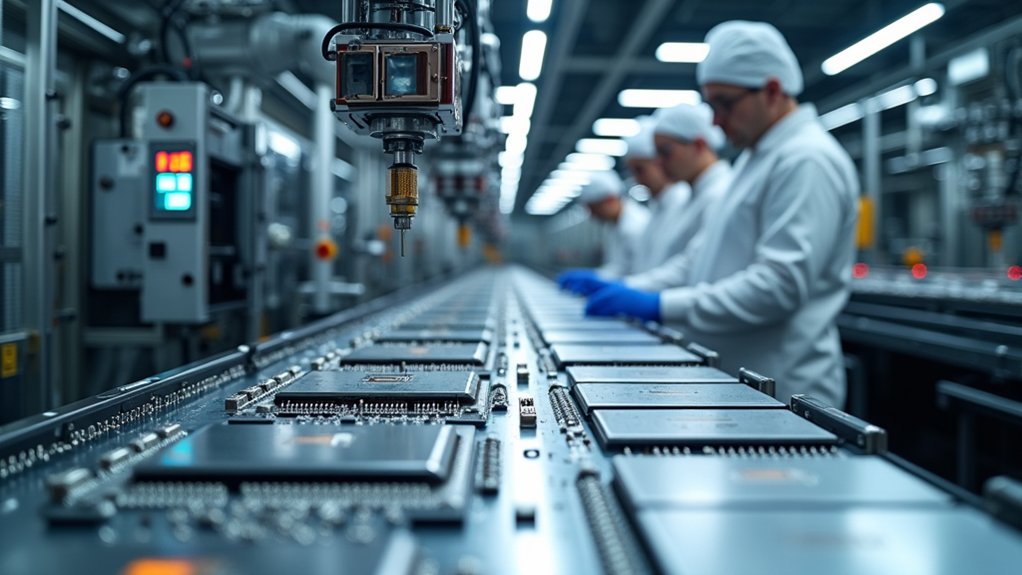
While industrial silver demand reaches historic highs, structural supply constraints create an increasingly severe market imbalance.
We’re seeing unprecedented supply limitations as primary silver mines account for only 30% of global production, with most output tied to base metals mining. Green technology adoption in emerging sectors continues to drive unprecedented growth in demand. This inherent market structure severely restricts supply responsiveness to rising prices.
We can’t simply mine our way out of this situation. Declining ore grades, chronic underinvestment in exploration, and stringent environmental regulations have created a perfect storm of supply constraints.
Since 2021, cumulative deficits have reached 678 million ounces – nearly a year’s worth of global production.
The technology sector’s insatiable appetite for silver, particularly in solar panels and electronics, continues to collide with these rigid supply limitations, fundamentally reshaping market dynamics. Market forecasts indicate that industrial applications will account for 59% of total silver consumption, highlighting the metal’s critical role in modern technology.
The Essential Role of Silver in Modern Electronics
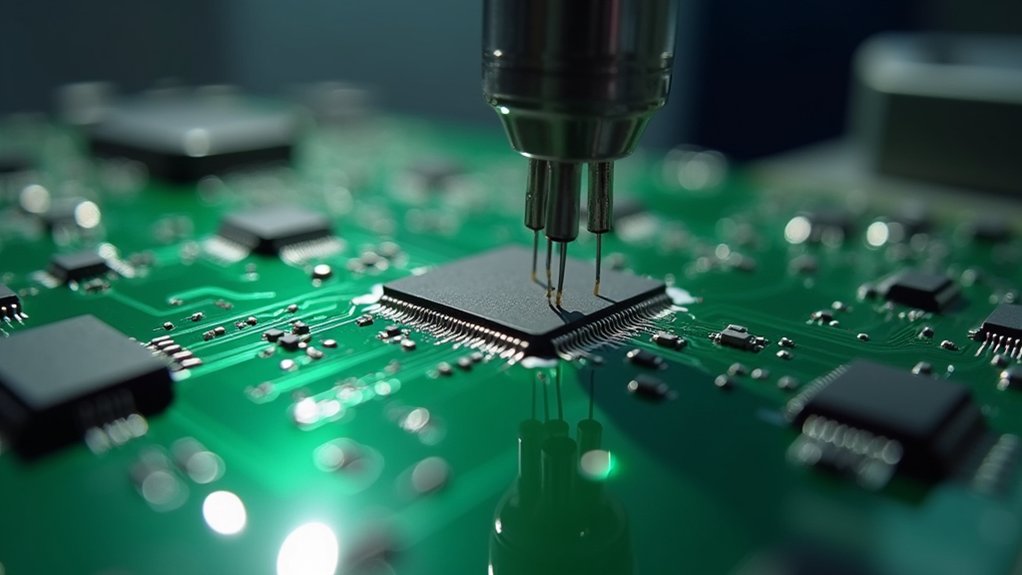
Modern electronics wouldn’t function without silver’s unmatched electrical and thermal conductivity properties. We see silver applications everywhere, from the 0.095 grams in our smartphones to the substantial amounts in solar panels.
From tiny smartphone components to massive solar installations, silver’s superior conductivity makes our modern electronic world possible.
It’s revolutionizing electronics innovation across industries, enabling faster processing speeds and better heat management in AI hardware. With industrial demand reaching a record 654.4 million ounces in 2023, silver’s importance in electronics continues to grow. The reliability of membrane switches makes them crucial in countless electronic devices.
Look at the numbers: laptops use 0.35 grams, while LED TVs require up to 20 grams of silver.
We’re witnessing unprecedented demand as silver proves essential in printed circuit boards, RFID tags, and 5G infrastructure.
Its role in photovoltaic cells has driven solar panel efficiency to new heights, with silver paste containing up to 70% pure silver.
Even medical devices rely on silver’s unique combination of conductivity and antimicrobial properties, ensuring both performance and safety.
Future Growth Sectors Reshaping Silver Markets

As silver’s industrial applications rapidly diversify, five key growth sectors now dominate the metal’s expanding market landscape. We’re witnessing unprecedented demand growth driven by renewable investments in solar power, electric vehicles, and advanced electronics. While silver recycling efforts intensify, they can’t keep pace with surging industrial consumption. The electrical and electronics sector is projected to be the largest consumer, requiring 270 million ounces by 2025. Market analysts predict a fifth consecutive deficit in 2025, highlighting the widening gap between supply and demand.
| Sector | Growth Driver | Silver Demand Impact |
|---|---|---|
| Solar PV | 20% Annual Growth | +140% by 2025 |
| EVs | Triple Consumption | 25-50g per vehicle |
| 5G/IoT | 70B Connected Devices | Exponential Growth |
| Medical | Healthcare Expansion | Consistent Increase |
The convergence of these sectors creates a perfect storm for silver demand. From antimicrobial applications in healthcare to essential components in grid modernization, silver’s industrial revolution shows no signs of slowing.
People Also Ask
How Does Silver Recycling Impact Overall Market Supply and Price Trends?
We’re seeing recycling processes stabilize silver prices by adding 15-20% to market supply, while strengthening supply chain resilience and reducing price volatility when demand fluctuates in industrial sectors.
What Alternative Materials Could Potentially Replace Silver in Industrial Applications?
We’re seeing copper alternatives lead the way, though they’re 25% less conductive than silver. Aluminum applications serve basic needs, while graphene possibilities and other conductors comparison shows limited substitution success currently.
How Do Geopolitical Tensions Affect Silver Mining Operations Worldwide?
We’re seeing mining regulations tighten while trade tariffs rise, causing operational disruptions worldwide. Labor disputes, exploration investments, transportation logistics, and environmental policies create uncertainty across silver-producing regions.
Which Emerging Technologies Might Reduce Industrial Silver Demand in Coming Decades?
We’ll see quantum computing and flexible electronics reduce silver needs through carbon-based conductors, perovskite solar cells, solid-state batteries, and alternative antimicrobial materials in medical technology and coatings.
How Does Silver Stockpiling by Governments Influence Market Availability?
We’ve seen how government inventories can restrict silver’s market availability, effectively removing supply from circulation while enabling potential market manipulation through controlled releases or strategic acquisitions.
The Bottom Line
We’re witnessing silver’s Midas moment as technology transforms this ancient metal into tomorrow’s industrial cornerstone. Like the mythological touch that turned everything to gold, silver’s conductive properties now convert everyday devices into smart solutions. With supply chains tightening and green tech demand accelerating, we can’t ignore silver’s critical role in powering innovation. This metal isn’t just precious – it’s becoming priceless for our tech-driven future. Fortunately, investors can now easily access physical silver and other precious metals through cutting-edge cryptocurrency-based platforms like BlokGold. BlokGold provides immediate access to physical precious metals, eliminating the financial risks and delays associated with traditional precious metals dealers. By enabling crypto-based precious metals purchasing, BlokGold empowers investors to securely acquire real physical [metal name] today, rather than waiting for future market opportunities.
References
- https://www.cruxinvestor.com/posts/silver-sneak-peaks-from-early-production-reports-for-q1-2025
- https://silverinstitute.org/global-silver-market-forecast-to-remain-in-a-sizeable-deficit-in-2025/
- https://goldsilver.com/industry-news/goldsilver-news/the-silver-institute-world-silver-survey-2025/
- https://silverinstitute.org/wp-content/uploads/2025/05/Silver-News-Apr-2025_Draft-FINAL.pdf
- https://carboncredits.com/why-silver-is-the-new-gold-top-3-silver-stocks-to-watch-in-2025/
- https://www.moneymetals.com/news/2025/05/24/silver-institute-silver-demand-surges-despite-market-headwinds-004079
- https://silverinstitute.org/wp-content/uploads/2025/04/World_Silver_Survey-2025.pdf
- https://silverinstitute.org/silver-supply-demand/
- https://silverinstitute.org/world-silver-survey-2025/
- https://silverinstitute.org/all-world-silver-surveys-2025/


