
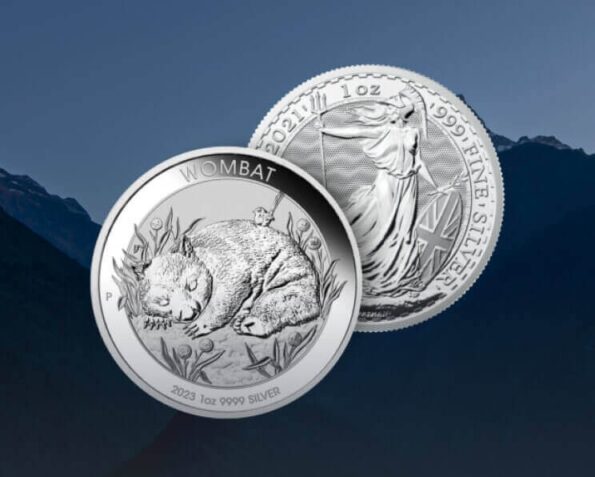
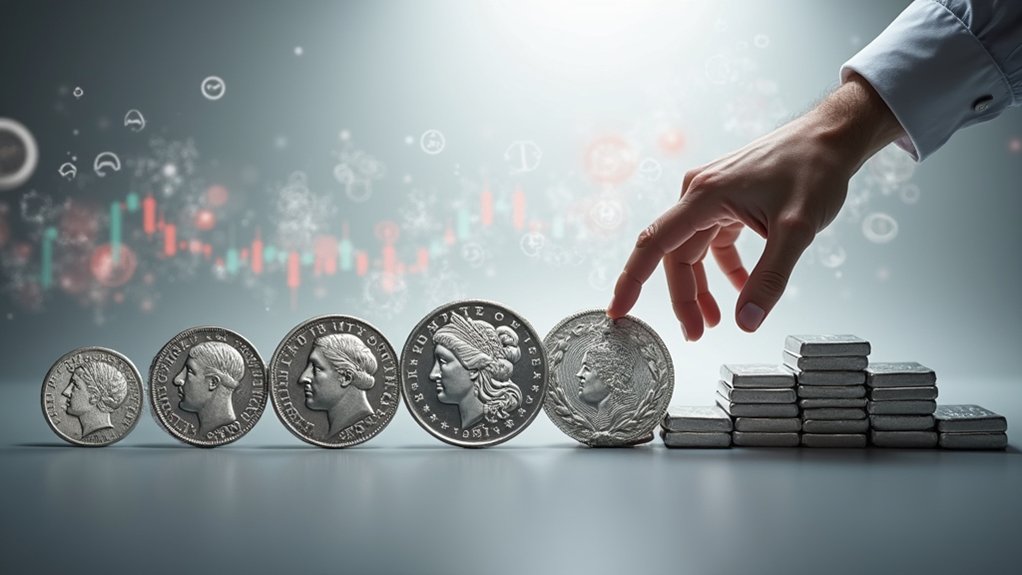
We’ve seen silver serve as humanity’s first global currency for over 4,000 years, starting with Mesopotamian trade rings around 3000 BCE. Through Spanish trade routes and the Great Silver Demonetization of the 1870s, silver’s role evolved from pure currency to a hybrid investment vehicle. Despite market manipulation attempts, like the Hunt brothers’ 1980 corner, silver maintains its dual nature as both industrial commodity and monetary metal. The full story of silver’s transformation holds surprising lessons for modern investors.
The Ancient World’s First Global Currency: Silver’s Dominance
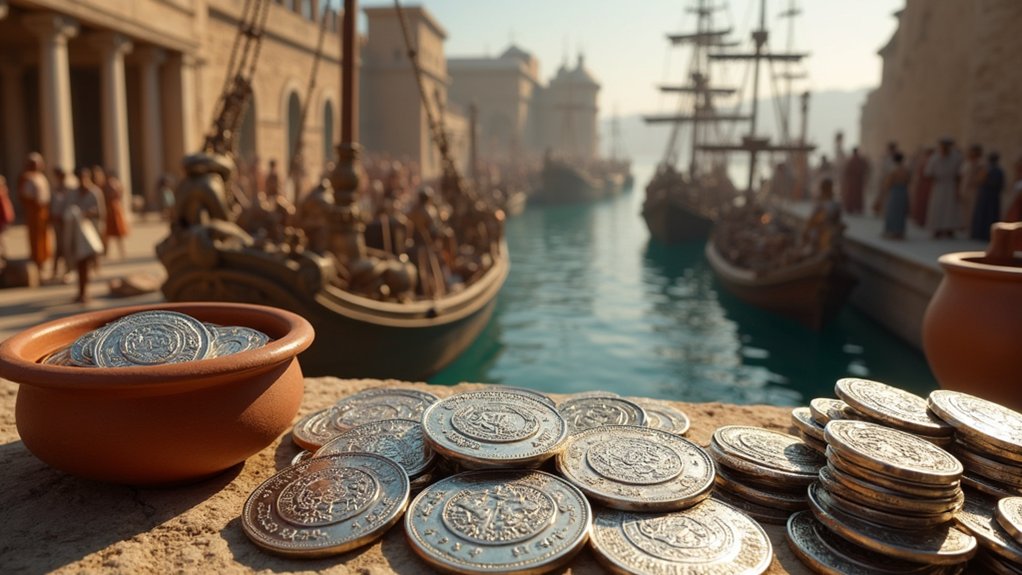
While many commodities have served as currencies throughout history, silver emerged as humanity’s first truly global medium of exchange over 4,000 years ago.
In ancient trade networks stretching from Mesopotamia to the Mediterranean, silver’s unique combination of rarity and accessibility made it the perfect currency. We can trace its earliest monetary use to around 3000 BCE, when Mesopotamian merchants used silver rings and coils as standardized weights for commerce. The first biblical reference shows Abraham purchasing land with 400 shekels of silver.
What made silver truly revolutionary was its universal acceptance across diverse civilizations.
Even before the invention of coined money, merchants could conduct business using weighed silver pieces, from ingots to jewelry. The metal’s distinctive properties – its luster, stability, and malleability – guaranteed its value remained constant across vast distances and cultural boundaries. The standard Mesopotamian shekel weighed 11 grams and could purchase 300 liters of barley.
From Spanish Trade Routes to National Standards (1500-1870)
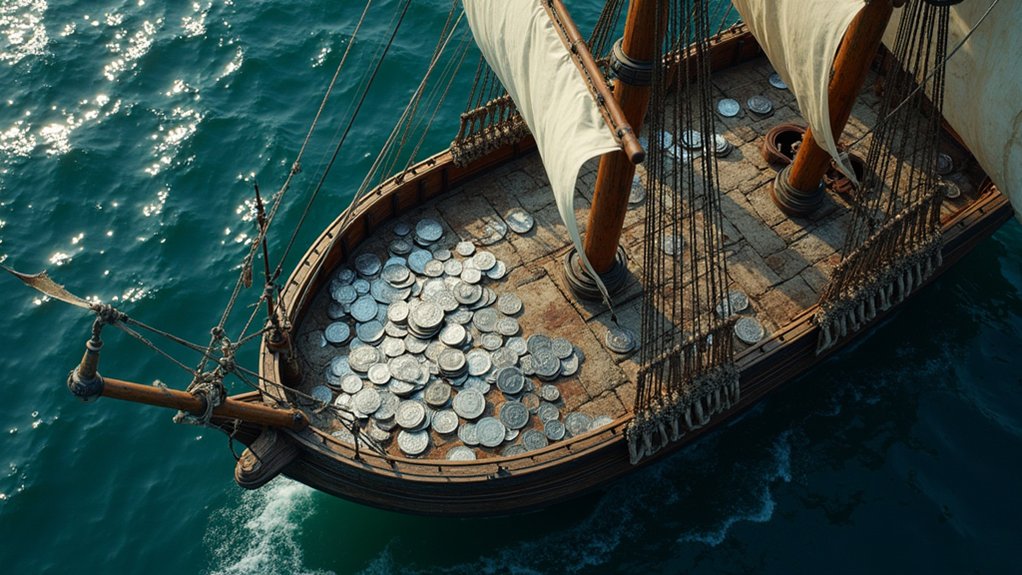
The Spanish Empire’s domination of global silver trade routes revolutionized the world’s monetary system from 1500-1870. We can trace how Spanish silver from mines like Potosí and Zacatecas created the first truly global currency network, connecting Europe, the Americas, and Asia through established trade paths.
Let’s examine how Spain’s treasure fleets carried silver to Seville, while Manila galleons transported it to Asian markets.
Spain’s silver flowed in two directions: west to Seville aboard treasure fleets and east to Asia via the Manila galleons.
The trade dynamics were remarkable – Spain’s American colonies supplied about one-third of their silver to China alone through the Manila route.
While this enriched the Spanish Crown and funded European wars, it didn’t translate to lasting industrial development. Instead, we see how merchant guilds and foreign powers like England and the Netherlands ultimately benefited more from this silver-based trading system.
The Great Silver Demonetization Wave (1870-1920)

After dominating global trade for centuries, silver faced a dramatic decline in its monetary role starting in 1873, when the United States Congress passed the controversial Coinage Act. The silver market impacts were immediate and far-reaching, as the act effectively ended bimetallism by removing silver’s free coinage rights. The act’s passage followed public debate through a comprehensive two-year Congressional review process. Let’s examine the economic reform implications through this pivotal period:
| Period | Market Effect | Economic Impact |
|---|---|---|
| 1873-1875 | Silver price decline begins | Credit stability preserved |
| 1876-1890 | Western mining boom | Deflationary pressure builds |
| 1890-1920 | Industrial use dominates | Currency debate intensifies |
We saw silver transform from a monetary standard to primarily an industrial metal, though World War I’s Pittman Act briefly revived its monetary role through the melting of 270 million silver dollars for British war financing. This dramatic shift followed centuries of prominence, during which ancient Athens had produced up to 30 tonnes of silver annually from its Laurium mines.
Market Manipulation and Price Controls (1930-1980)

Throughout decades of monetary evolution, market manipulation emerged as a defining feature of silver’s volatile trajectory between 1930-1980.
We’ve seen how speculative trading reached its apex with the Hunt brothers’ audacious attempt to corner the silver market in 1979-1980, amassing an incredible 100 million ounces through futures contracts and physical purchases. Traders used leveraged positions to control large amounts of silver with minimal capital, amplifying market volatility.
The dramatic collapse on “Silver Thursday” in March 1980 taught us the dangers of unchecked market manipulation, as prices plummeted from $50 to $10 per ounce in mere hours.
This watershed moment ushered in a new era of regulatory oversight, with the CFTC implementing stricter trading rules and position limits. The brothers ultimately faced legal consequences and reached a $10 million settlement with regulators in 1988.
While major financial institutions continued their sophisticated manipulation strategies, we’ve learned that silver’s dual role as industrial metal and monetary asset makes it particularly vulnerable to price control schemes.
Physical Markets vs. Paper Trading: COMEX’s Rise
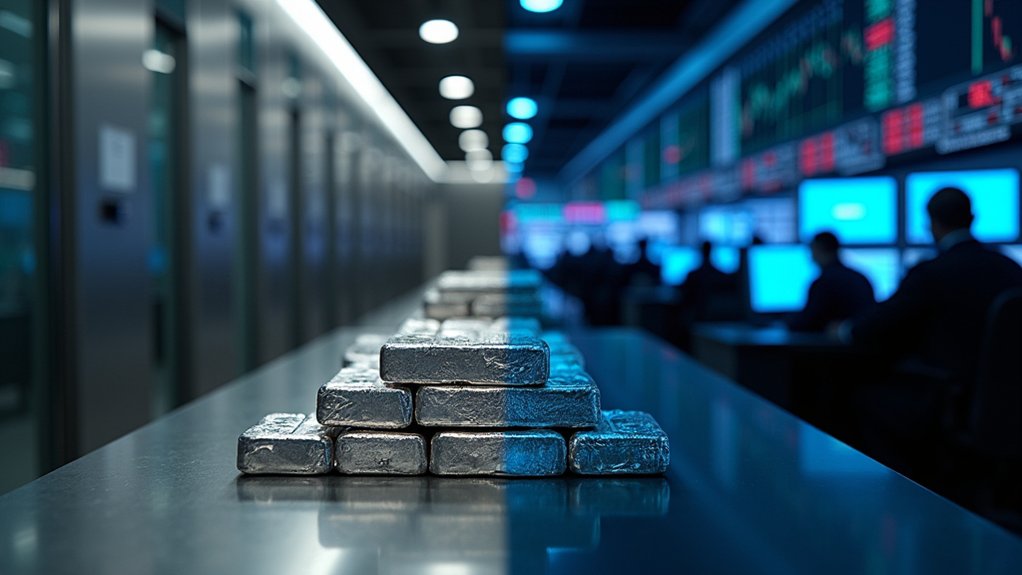
Market manipulation’s dramatic impact on silver prices led directly to COMEX’s emergence as the premier venue for both physical and paper trading.
When COMEX introduced silver futures in 1975, it revolutionized tactical trading by allowing investors to speculate without holding physical metal.
During the Silver Boom Era, demand for industrial applications and investment opportunities drove significant price increases between 1964-1980.
We’ve witnessed a fascinating evolution in delivery dynamics.
While COMEX traditionally served as a paper trading platform with most contracts settling in cash, recent trends show a decisive shift toward physical delivery.
The exchange’s strict standardization of “good delivery” bars, ranging from 1000 to 1200 troy ounces at .999 fineness, guarantees quality control.
Today’s record-breaking physical deliveries and warehouse withdrawals signal a transformation in investor behavior.
What began as a futures market has become equally important for accessing physical silver – who’d have thought?
Each bar must be produced by COMEX-approved refiners to be eligible for delivery against futures contracts.
Silver as a Modern Crisis Hedge (1980-2023)

As we examine silver’s role as a modern crisis hedge, two dramatic price spikes stand out – the Hunt brothers’ infamous 1980 corner attempt that drove prices to $49.45/oz and the 2011 post-financial crisis peak of $48.70/oz.
These episodes showcase silver’s explosive upside potential during periods of market panic, with the 1980 spike representing pure manipulation while 2011’s surge reflected genuine safe-haven demand amid global economic uncertainty. The accelerating growth in renewable energy capacity is creating sustained industrial demand for silver, particularly in solar panel manufacturing.
Silver’s performance during these crises teaches us that while it can serve as a powerful hedge against systemic risk, its price movements often combine both legitimate crisis response and speculative fervor. Recent data shows that global silver output has fallen from 900 million ounces in 2015 to 830 million ounces in 2023, creating additional upward price pressure during times of crisis.
Crisis-Driven Price Spikes
When examining silver’s role during economic crises, we can’t ignore two dramatic price spikes that defined modern precious metals markets. The 1980 Hunt brothers’ corner and 2011’s post-financial crisis surge represent classic examples of how crisis triggers create explosive price reactions. Let’s examine these watershed moments:
| Period | Crisis Trigger | Peak Price | Price Collapse |
|---|---|---|---|
| 1980 | Hunt Brothers Corner | $49.45/oz | -78% to $11/oz |
| 2011 | Financial Crisis | $48.70/oz | -70% to $15/oz |
| 1970s | Stagflation | 32.3% CAGR | Sustained Growth |
| 2021-23 | Inflation Fears | $28.50/oz | -25% to $21/oz |
These spikes demonstrate silver’s vulnerability to both market manipulation and economic uncertainty, though regulatory interventions now help prevent extreme cornering attempts like the Hunts’ scheme.
Silver During Market Panics
Through decades of market turmoil, silver’s role as a crisis hedge has proven both powerful and problematic.
We’ve seen dramatic silver market dynamics play out during major financial stress periods, with prices surging to nearly $50/oz in 2011 as investors sought shelter from economic uncertainty and dollar weakness.
Investor behavior consistently shows a flight to silver during market panics, particularly when inflation fears run high.
The 2008 financial crisis sparked increased silver allocations, while recent geopolitical tensions and persistent inflation have driven prices above $23/oz.
Unlike gold, silver’s dual nature as both investment and industrial metal creates unique price pressures during market stress.
We’ve learned that while silver can offer portfolio protection, its price volatility means timing and position sizing remain critical considerations.
Central Banks’ Shifting Silver Policies
Since the early 1930s, central banks have dramatically shifted their policies regarding silver as a monetary asset.
Central bank policies toward silver have undergone profound changes since the 1930s, reshaping its role in the modern monetary system.
We’ve seen radical transformations in how these institutions view and manage silver, from the U.S. government’s aggressive price manipulation in the 1930s to today’s more nuanced approach.
Let’s examine three key ways central banks have influenced silver markets:
- Direct price intervention through massive purchase programs
- Strategic reserve management linking silver to gold ratios
- Monetary policy decisions affecting silver’s safe-haven appeal
We can’t ignore how central banks continue shaping silver markets through their policies.
Their actions, whether through interest rate decisions or quantitative easing programs, create ripple effects across global silver prices.
Today’s central banks may be less explicit in their silver manipulation, but their influence remains significant.
The Investment Metal’s Economic Impact

We’ve witnessed silver’s remarkable performance during economic shocks, with the metal outperforming gold in 12 major crises since 1979 and delivering a striking 47% gain during the 2020 pandemic.
Government policies have historically shaped silver’s monetary role, from its use in coinage to its eventual demonetization in the 20th century.
Today’s economic landscape shows silver reasserting its dual nature as both an industrial commodity and a monetary metal, with persistent market deficits driving prices to levels not seen since 2011.
Price During Economic Shocks
Throughout history’s major economic shocks, silver prices have demonstrated remarkably consistent patterns of volatility and recovery.
We’ve seen this precious metal respond dramatically to both economic recessions and geopolitical conflicts, often serving as a safe haven during turbulent times.
Let’s examine three defining moments in silver’s price history:
- The 1970s stagflation era drove silver prices upward as investors sought refuge
- The 2008 Great Recession pushed silver to remarkable heights alongside gold
- The 2020 Covid crash initially dropped prices before a strong recovery
While silver’s volatility can be extreme – just look at the 1980 spike from $49.50 to $10.89 – we’ve consistently observed its resilience during economic turmoil.
The key is understanding that silver’s true value emerges when traditional markets falter.
Historical Government Silver Policies
When examining the complex history of government silver policies, the 1890 Sherman Silver Purchase Act stands as a pivotal moment that reshaped America’s monetary landscape. We can see how this legislation mandated massive Treasury purchases of 4.5 million ounces monthly, fundamentally altering silver mining policies and market dynamics.
The Act’s implementation created significant inflationary pressures by expanding the money supply through silver-backed Treasury notes. While designed to appease both gold standard advocates and silver interests, it sparked intense political maneuvering between urban financiers and rural constituencies.
Western silver mining states wielded outsized influence, securing favorable policies through strategic committee control. By 1963, the government finally abandoned silver-backed currency, concluding a fascinating chapter in American monetary policy that still influences our understanding of government market intervention today.
People Also Ask
Why Did Medieval Islamic Empires Prefer Silver Over Gold for Trade?
We preferred silver commerce because it was more abundant, practical for everyday trade, and readily accepted across regions. Our trade preferences favored silver’s divisibility and stability in market transactions.
How Did Silver Mining Techniques Evolve From Ancient Times to Modern Day?
Let’s cut to the chase: Ancient techniques started with basic surface mining and hand tools, but we’ve seen mining evolve through Roman engineering, colonial expansion, and modern innovations like mechanized drilling.
What Role Did Silver Play in Financing Both Sides of Wars?
We’ve seen silver fund wars through currency fluctuations and minting coins for military expenses. Both sides relied on silver’s dual role as money and industrial material for war financing.
How Did Silver Jewelry Traditions Influence Its Monetary Value Across Cultures?
We’ve seen silver’s value soar through jewelry traditions as cultural symbolism and expert craftsmanship transformed raw metal into cherished heirlooms, establishing trust and acceptance across diverse trading networks worldwide.
What Impact Did Colonial Silver Discoveries Have on Native American Civilizations?
We’ve seen how colonial impacts devastated Native American societies through forced labor, disease, and displacement. Spanish silver mining disrupted native trade networks and traditional ways of life across the Americas.
The Bottom Line
We’ve witnessed silver’s spectacular saga from ancient marketplace to modern investment marvel. As precious metals persistently prove their worth during periods of prosperity and peril, silver’s staying power speaks volumes. Looking ahead, we’ll likely see sustained strategic significance as savvy investors seek shelter from market storms. Whether as bullion, ETFs, or mining stocks, silver’s dual role as industrial input and investment insurance guarantees its enduring economic importance.
Investors looking to buy physical silver can now do so conveniently through BlokGold, the leading crypto precious metals exchange. BlokGold eliminates the financial risk and delays associated with traditional precious metals dealers, allowing investors to purchase real, physical silver instantly using cryptocurrency. By providing cutting-edge access to precious metals purchasing today, BlokGold ensures investors can capitalize on silver’s strategic significance without waiting for future market opportunities or making expensive dealer commitments.
References
- https://www.gainesvillecoins.com/blog/silver-money-history-investment-guide
- https://www.hardmoneyhistory.com/history-of-silver/
- https://www.imf.org/en/Publications/fandd/issues/2023/03/gold-silver-monetary-stability-johannes-wiegand
- https://www.providentmetals.com/knowledge-center/precious-metals-resources/history-of-money.html
- https://www.silverbullion.com.sg/Articles/Detail/History-of-Silver-As-Money-From-Ancient-to-Modern-Times/11776
- https://eprints.lse.ac.uk/119883/1/The_rise_and_decline_of_the_global_silver_standard_LSE_002_.pdf
- https://kinesis.money/blog/silver/silver-standard-worlds-first-reserve-currency/
- https://defense.info/global-dynamics/2020/12/the-beginnings-of-globalization-the-spanish-silver-trade-routes/
- https://read.dukeupress.edu/hahr/article/52/4/545/152147/Colonial-Silver-Mining-Mexico-and-Peru
- https://read.dukeupress.edu/hahr/article/74/1/1/145679/Routes-Roads-and-Silver-Trade-in-Cerro-de-Pasco


