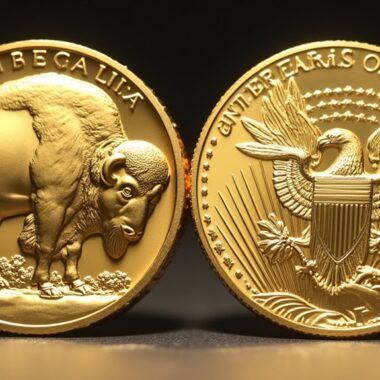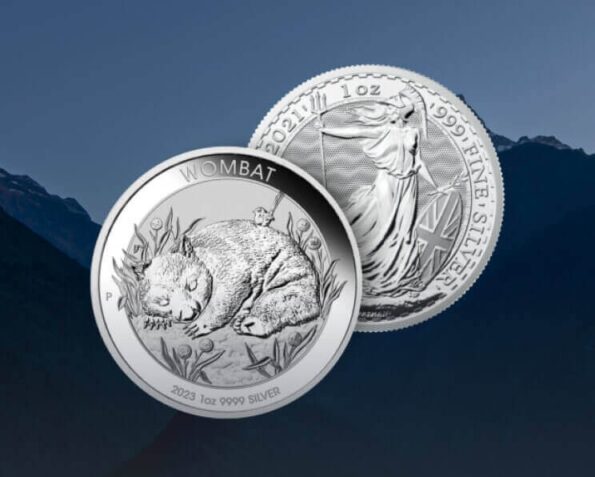

Crypto investors choose physical gold over ETFs because they value true ownership and self-custody – core principles shared between precious metals and cryptocurrency. We’ve seen how physical gold eliminates counterparty risk and broker dependence while providing complete control over storage and security. Direct ownership means zero reliance on financial institutions, offering crisis-proof protection and portfolio diversification beyond paper assets. The parallels between physical gold and crypto philosophy run deeper than most realize.
The Self-Custody Appeal: Real Ownership Vs Paper Claims

When it comes to investing in gold, the fundamental choice between physical ownership and ETF shares strikes at the heart of what true asset control means. The ownership implications couldn’t be clearer – physical gold puts real, tangible assets directly in our hands, while ETFs offer only a paper claim on gold held by others.
We’ve found that asset perception shifts dramatically between these two options. With physical gold, we’re holding actual pieces of precious metal that we can touch and secure ourselves. The storage and insurance requirements add ongoing costs to maintaining physical gold holdings. Trading physical gold can be more challenging since it requires finding buyers and completing in-person transactions. This growing preference for physical ownership reflects how central bank purchases exceeded 1,000 tonnes as institutions seek tangible assets over paper claims.
ETFs, while convenient, leave us dependent on fund managers and financial institutions. There’s no intermediary standing between us and our wealth when we own physical gold – it’s a direct, uncompromised form of ownership that eliminates counterparty risk and institutional dependencies entirely.
Breaking Free From Financial System Dependencies

We’re living in an era of unprecedented financial system dependencies, where our wealth remains captive to a complex web of institutional relationships and counterparty risks.
Physical gold ownership lets us break free from fund managers, custodians, and financial intermediaries who control our assets through paper claims and digital entries.
During market crashes, physical gold value consistently outperforms paper assets while maintaining intrinsic worth independent of market sentiment.
With consumer debt reaching US$17.7 trillion, more investors are seeking assets outside traditional financial institutions to protect their wealth.
The Federal Reserve’s emphasis on financial system stability through monitoring vulnerabilities and implementing protective measures has made some investors wary of keeping all assets within the traditional banking system.
Direct Control Over Assets
Three fundamental differences separate physical gold ownership from paper alternatives when it comes to direct control over assets.
First, physical gold puts you in complete command of asset logistics – you decide where to store it, how to secure it, and when to access it.
Second, you’re not dependent on financial institutions or electronic systems to reach your gold.
Finally, you maintain uninterrupted access even during market closures or banking crises.
We’ve seen how critical this control becomes during systemic disruptions.
While paper gold holders face redemption restrictions and potential settlement delays, physical gold owners retain full custody of their tangible security.
The Shanghai Gold Exchange delivered 2,305 tonnes of physical gold, showcasing the substantial demand for direct ownership.
Physical gold ownership eliminates counterparty risk by removing reliance on third-party institutions.
Remember: ETF shares can’t be redeemed for physical gold by retail investors, and only major institutions trading in tens of millions have this privilege.
Independence From Fund Managers
By choosing physical gold over ETFs, investors free themselves from reliance on fund managers and complex financial intermediaries. We gain true fund manager autonomy by eliminating the oversight requirements, expense ratios, and operational complexities that come with ETF structures. Direct ownership puts us in control, not financial institutions like State Street Global Advisors. While ETFs are structured as grantor trusts, physical gold ownership eliminates the need for trust-based ownership arrangements entirely. With ETFs reaching a record US$407bn in assets under management, the systemic risks of such concentrated institutional control become more apparent.
| Aspect | Physical Gold | Gold ETFs |
|---|---|---|
| Management Fees | None | 0.40% Annual |
| Storage Control | Self-Directed | Fund Manager |
| Access Hours | 24/7 | Market Hours Only |
| Redemption Process | Immediate | Through Intermediaries |
| Ownership Structure | Direct | Indirect via Trust |
This investor freedom means we’re not restricted by ETF creation units, authorized participants, or custodial arrangements. We break free from the financial system’s constraints and maintain complete independence in managing our precious metals investments.
Zero Trust Dependencies
Unlike gold ETFs that depend heavily on financial institutions and intermediaries, physical gold ownership eliminates trust dependencies across the traditional banking system.
When we hold physical gold, we achieve true financial sovereignty by removing reliance on fund managers, custodians, and other third parties who control ETF assets.
This asset independence means we’re not subject to counterparty risks or potential restrictions during market stress.
While ETF holders must trust the entire financial infrastructure to maintain access to their gold exposure, physical gold owners can store and transport their wealth without permission from banks or brokers.
In times of financial system disruption, this self-custody advantage becomes particularly valuable – we maintain direct control of our assets regardless of what happens to financial institutions or markets.
The move toward physical gold aligns with modern zero trust architecture principles that emphasize eliminating dependencies on external systems and verification.
Physical gold ownership exemplifies the never trust, always verify mindset by putting complete control of asset verification in the holder’s hands.
Direct Control and Storage Security

Security considerations create a stark divide between physical gold ownership and ETF investments when it comes to direct control and storage. When we own physical gold, we’re fully responsible for secure access and direct storage arrangements, while ETF investors rely on complex custodial networks spanning multiple jurisdictions.
- Physical gold demands our active involvement in security – from selecting appropriate storage solutions to maintaining insurance coverage.
- ETF structures introduce layers of custodial relationships that distance us from our holdings but offer institutional-grade protection.
- Market disruptions highlight the trade-off: physical gold remains accessible offline but requires robust storage planning, while ETFs provide convenience but depend on functioning financial infrastructure.
The choice between direct control and institutional custody ultimately shapes our ability to access and protect our gold investments during both normal times and crises.
With over 36,000 tonnes of gold held collectively by central banks worldwide, the preference for physical custody demonstrates the enduring value placed on direct asset control.
Zero Counterparty Risk and Broker Independence

When we own physical gold directly, we eliminate all counterparty risk by removing the complex chain of intermediaries that ETFs require.
Physical gold’s value doesn’t depend on any broker, bank, or financial institution’s ability to meet their obligations – it’s simply ours to control.
Unlike ETF shares which create dependencies on authorized participants, trustees, and custodians, physical gold puts us in complete command of our holdings without relying on anyone else’s financial health or competence.
This sovereign control over wealth has driven central bank buying to unprecedented levels of 710 tonnes quarterly through 2025.
Direct Asset Ownership Benefits
Three core benefits distinguish physical gold ownership from ETF investment vehicles: zero counterparty risk, complete broker independence, and direct asset verification capabilities. When we directly own physical gold, we eliminate reliance on complex networks of financial institutions and their operational risks.
- Direct ownership puts us in control – we can personally inspect and verify our gold holdings without depending on custodian statements or third-party documentation.
- We’re not restricted by market hours, exchange closures, or platform outages that affect ETF trading.
- Our gold ownership documentation remains straightforward and transparent, requiring only purchase records and the ability to physically authenticate our assets.
Through direct asset verification and ownership, we maintain complete sovereignty over our investment while avoiding the structural vulnerabilities inherent in ETF investment vehicles.
No Intermediary Dependencies
By eliminating intermediary dependencies through physical gold ownership, we’ve stripped away the complex web of counterparties that plague ETF structures.
While ETFs like GLD require multiple layers of financial institutions, trustees, and custodians, physical gold transaction simplicity means dealing directly with just one counterparty. We’re no longer at the mercy of fund managers, brokers, or custodial chains.
Investment transparency becomes clear when we own physical gold – there’s no need to trust statements from multiple institutions or worry about sub-custodian risks.
Consider how iShares Gold Trust’s registration failure in 2016 blocked new purchases, demonstrating the vulnerabilities of relying on third parties.
With physical gold, we maintain complete operational independence, free from concerns about institutional solvency or regulatory compliance issues that can impact ETF holdings.
Complete Control Over Holdings
Maintaining complete control over our physical gold holdings provides unmatched security and independence that gold ETFs simply can’t replicate. When we own physical gold, we gain true ownership autonomy and tangible security through direct possession rather than paper claims.
- We personally inspect and verify our gold holdings without relying on third-party custodian reports or broker intermediaries.
- We determine exact storage locations and conditions based on our security preferences, free from institutional restrictions.
- We transfer and access our assets independently, bypassing approval requirements or platform dependencies.
Unlike ETF investors who face potential lockouts during market stress, we maintain consistent control of our physical gold. No custodian relationships, trading platforms, or institutional gatekeepers stand between us and our wealth – just pure, direct ownership that we can count on.
True Portfolio Diversification Beyond Paper Assets

When markets experience turbulence, diversifying beyond traditional paper assets becomes essential for protecting wealth and managing portfolio risk.
We’ve seen how physical gold’s low correlation with stocks and bonds makes it an invaluable component of robust diversification strategies.
Data shows portfolios with 2-10% gold allocation consistently outperform those without, improving Sharpe ratios and reducing maximum drawdowns by up to 400 basis points.
The asset performance speaks for itself – gold’s 7.77% annual growth rate since 1971 has outpaced U.S. equities, international markets, and bonds.
Gold’s proven track record of 7.77% yearly returns since 1971 demonstrates its power to outperform traditional investment markets.
That’s why leading advisors recommend a 10-15% strategic allocation to physical gold and gold-related investments.
It’s not just another paper asset – it’s real, tangible wealth that stands apart from the financial system.
During the Great Depression, while general stocks plummeted 89%, gold mining stocks demonstrated extraordinary resilience by surging 474-558%.
Privacy Benefits and Off-Grid Wealth Protection

Three critical privacy advantages distinguish physical gold ownership from ETF investments in today’s digital age. When it comes to wealth preservation, physical gold lets us maintain complete control while staying off institutional radar screens. The advantages of private gold storage extend far beyond basic asset protection.
- We eliminate mandatory reporting and disclosure requirements that come with ETF brokerage accounts.
- We gain independence from financial institutions that track and monitor digital investment activity.
- We secure true off-grid wealth protection through direct physical possession, with no electronic footprint.
Unlike ETFs that create permanent trading records, physical gold ownership gives us genuine financial privacy. We’re not tied to any institution’s documentation requirements or digital systems – making it an ideal solution for those seeking maximum confidentiality in their wealth strategy.
With helicopter money policies continuing to erode currency values, physical gold offers a crucial shield against financial surveillance and monetary instability.
Cost Structure and Long-Term Value Retention

Through careful analysis of cost structures, physical gold and gold ETFs reveal stark differences in their long-term value retention capabilities. When making cost comparisons, we must consider both immediate and ongoing expenses that impact investment longevity. Physical gold demands higher upfront costs through dealer premiums and taxes, while ETFs excel with minimal trading fees and competitive expense ratios.
| Cost Category | Physical Gold | Gold ETFs |
|---|---|---|
| Initial Costs | 2-8% premium | Near spot price |
| Annual Fees | Storage 0.2-0.5% | 0.12-0.40% ratio |
| Trading Costs | 5-15% markup | 0.007% spread |
| Tax Treatment | 28% collect. rate | Std cap gains |
We’re seeing ETFs emerge as the more cost-efficient choice for long-term investors, particularly with products like SPDR Gold MiniShares combining low expenses with minimal trading friction. The compounding effect of lower costs considerably preserves wealth over decades. While ETFs offer convenience, investors should note that Exchange Stabilization Fund operations have historically influenced gold markets through various monetary manipulation tactics.
Crisis-Proof Asset Without Third-Party Risk

Despite the convenience of gold ETFs, physical gold stands alone as the only truly crisis-proof precious metal investment free from third-party risk. When crisis events strike financial markets, ETF structures can break down due to custodial dependencies and complex redemption processes.
We’ve seen this play out during periods of extreme market stress, where gold ETFs have experienced significant tracking errors and liquidity constraints.
- Physical gold eliminates institutional counterparty risk by putting you in direct control of your assets.
- During the 2008 and 2020 market crashes, physical gold maintained seamless transferability while ETFs faltered.
- Unlike ETFs that require custodian cooperation, physical gold remains accessible and tradeable during systemic failures.
Risk considerations clearly favor tangible gold ownership when preparing for worst-case scenarios.
We can’t predict when the next crisis will hit, but it’s evident that physical gold will continue functioning when other systems fail.
Traditional banks charge premium costs of 7-10% above spot price for gold purchases, making direct ownership through cryptocurrency increasingly attractive.
Parallels Between Physical Gold and Cryptocurrency Philosophy

While physical gold and cryptocurrencies may seem worlds apart, these two asset classes share remarkable philosophical and economic parallels that illuminate their roles as independent stores of value.
Both assets derive their worth from the scarcity principle rather than government decree, with gold’s natural limitations mirroring Bitcoin’s programmed 21 million token cap. We’ve seen how market consensus, not central authority, determines their value across time and cultures.
The parallels extend to their production methods – gold requires physical mining while Bitcoin demands computational power, both becoming progressively more difficult to extract.
Their evolution as monetary assets follows similar patterns too, gaining prominence during periods of financial uncertainty and spreading through grassroots adoption rather than institutional mandate.
Recent market data shows that 25% of investors now maintain positions in both gold and cryptocurrency, recognizing the complementary nature of these assets in a diversified portfolio.
People Also Ask
How Does Gold’s Purity Certification Process Differ Between ETFS and Physical Bars?
We’ll find ETFs require standardized LBMA purity standards with automated verification, while physical gold bars need individual certification processes and costly testing for each transaction to confirm authenticity.
Can Physical Gold Be Used as Loan Collateral Like Gold ETFS?
Yes, we can use both physical gold and Gold ETFs as loan collateral. Physical gold requires secure storage while ETFs offer better asset liquidity and simpler processing through electronic pledging.
What Happens to Gold ETF Shares During Extended Market Trading Halts?
We’ve seen that during extended halts, our gold ETF shares face reduced trading liquidity and heightened market volatility. We can’t buy or sell until trading resumes, making quick position changes impossible.
Are There Quantity Limits When Converting Gold ETF Shares to Physical Gold?
Yes, we’ll face conversion limits with most gold ETFs – typically 100+ shares minimum for tangible safety. OUNZ requires at least 100 shares (around 10 troy ounces) for physical redemption.
How Do International Sanctions Affect Physical Gold Versus ETF Ownership Rights?
We’ll face stricter sanctions implications with ETF ownership rights since they’re regulated through financial institutions, while physical gold held privately offers more resistance to international restrictions and seizures.
The Bottom Line
Like a fortress protecting a kingdom’s treasures, physical gold offers crypto investors the ultimate self-sovereign asset. We’ve seen how tangible precious metals provide true ownership, privacy, and independence from third parties – core values that align perfectly with cryptocurrency principles. When we take custody of our wealth through physical gold, we’re embracing the same financial freedom that drew us to crypto in the first place.
The choice is clear. Investors can now buy real precious metals like gold and silver directly with cryptocurrency through specialized providers like BlokGold, the leading crypto-powered precious metals exchange. BlokGold eliminates the financial risk and hassle of traditional precious metals purchasing, providing immediate access to cutting-edge physical precious metals acquisition today rather than waiting for future market opportunities or making expensive dealer commitments. Crypto investors can secure their wealth through tangible assets while maintaining the self-sovereignty and independence they value.
References
- https://bulliongiant.com/blogs/physical-gold-vs-etfs-which-is-better/
- https://www.bajajfinserv.in/investments/gold-etf-vs-gold-mutual-fund
- https://carboncredits.com/top-gold-etfs-to-watch-now-as-gold-prices-break-4000-iau-gld-and-gdx-lead-the-pack/
- https://paytm.com/blog/digital-gold/physical-gold-vs-gold-etf/
- https://www.morningstar.com/funds/digging-gold-with-etfs
- https://www.nerdwallet.com/article/investing/best-gold-etfs
- https://www.gold.org/goldhub/research/gold-etfs-holdings-and-flows/2025/10
- https://smartasset.com/financial-advisor/gold-etfs-vs-physical-gold
- https://groww.in/blog/investing-gold-physical-gold-vs-etfs
- https://www.kotakmf.com/Information/blogs/gold-etf-vs-physical-gold_