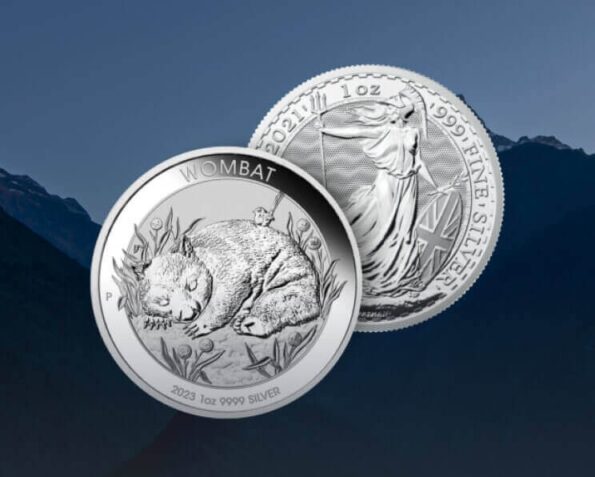

We’ve got two heavyweight contenders here. The Krugerrand, minted since 1967, dominates global markets with its 22-karat durability and lower premiums, while the Britannia counters with 24-karat purity and UK tax exemptions since 1987. Both hold one troy ounce of fine gold, but your choice hinges on geography—go Krugerrand for international liquidity, Britannia for domestic tax benefits. The specifics of premium pricing, regional recognition, and portfolio strategy reveal which truly suits your goals.
Historical Significance: First Modern Bullion Vs British Heritage

When we examine the Krugerrand and Britannia side by side, we’re really looking at two different chapters in modern gold coin history—one that broke entirely new ground, and another that came later to reclaim a tradition.
The Krugerrand’s historical impact can’t be overstated: minted in 1967, it became the first legal tender gold coin after World War II, establishing the 1-ounce bullion standard that’d dominate the market. By 1980, it controlled over 90% of global coin sales.
The Britannia, introduced in 1987, emerged partly because Krugerrand import restrictions created a gap. While the Krugerrand revolutionized bullion investing, the Britannia’s cultural relevance stems from reasserting British monetary heritage during changing geopolitical circumstances. Contemporary releases like the 2025 Queen’s Panther continue this tradition of 99.99% Gold purity that establishes quality standards for modern bullion coins. The Royal Mint’s commitment to investment-grade quality ensures these coins maintain their value as tangible assets for collectors and investors.
Modern gold bullion coins like the Perth Mint’s 2024 Dragons coin continue this legacy by maintaining 99.99% purity standards that collectors and investors demand today. While the Britannia’s cultural relevance stems from reasserting British monetary heritage during changing geopolitical circumstances.
Gold Purity: 22K Krugerrand Vs 24K Britannia Composition
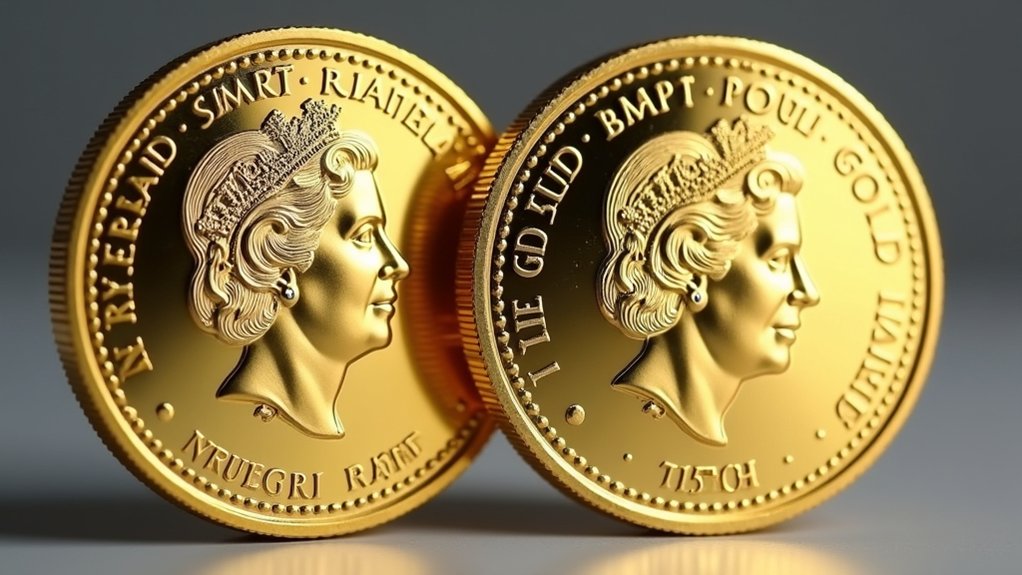
When we examine the composition of these two iconic coins, we’re really looking at a fundamental tradeoff between durability and purity—the Krugerrand’s 22-karat gold-copper alloy gives it that distinctive reddish hue and superior resistance to scratching, while the Britannia’s shift to 24-karat pure gold since 2013 removes the copper but sacrifices some of that built-in toughness.
Both approaches contain precisely one troy ounce of fine gold, so the difference isn’t about how much actual gold you’re getting, but rather how that gold is mixed and what that means for the coin’s longevity and appearance over time.
The Krugerrand, minted by the South African Mint, has been a cornerstone of gold investment for decades, combining its proven durability with widespread market recognition among collectors worldwide. Like modern bullion coins such as the Lunar III series, the Krugerrand maintains brilliant uncirculated condition to preserve its quality for investors and collectors. Investment-grade bullion coins typically offer buyback guarantee options to provide liquidity for sellers in the secondary market.
Understanding these composition choices helps us see why collectors often pick based on their priorities: those worried about wear and tear might favor the Krugerrand’s resilient alloy, while purists who value the highest gold standard tend toward the modern Britannia’s pristine composition.
Krugerrand’s Copper Alloy Durability
Because pure 24-karat gold is remarkably soft and susceptible to scratching and denting during regular handling, the Krugerrand’s designers made a deliberate choice to mix copper with their gold, creating a more durable 22-karat alloy that’s better equipped to withstand the wear and tear of circulation and collection.
This copper alloy durability strategy offers several practical benefits:
- Enhanced impact resistance – The copper content notably strengthens the coin against accidental drops and bumps that collectors inevitably encounter.
- Reduced surface damage – Scratches and scuffs that’d mar pure gold become far less likely with the reinforced composition.
- Maintained collectibility – Coins retain their aesthetic appeal over decades, preserving investment value. Similar to how the Napoleon III gold coins demonstrate long-term value appreciation, well-maintained Krugerrands benefit from their durable composition.
We appreciate how this metallurgical approach balances purity with practicality, ensuring Krugerrands remain attractive and resilient through generations of handling. Certified gold bars with original packaging and authenticity documentation similarly preserve their market appeal and investment value over time. In contrast, the Britannia coin achieves 99.99% gold purity while still maintaining good condition through careful storage practices.
Britannia’s Pure Gold Standard
While the Krugerrand’s copper alloy provides exceptional durability for everyday handling, the Britannia coin takes a different approach—one that prioritizes maximum purity over the practical benefits of alloying.
Since 2013, Britannia’s production shifted to 24-karat gold with 99.99% purity, representing a significant evolution in the coin’s composition.
This pure gold standard contrasts sharply with Krugerrand’s legacy of 22-karat gold, which contains 91.67% purity mixed with copper.
We’re fundamentally comparing two philosophies: the Britannia emphasizes absolute gold content and investment purity, while Krugerrand’s legacy remains rooted in durability and timeless appeal.
Both approaches serve investors well, though the Britannia now matches modern pure-gold standards that collectors increasingly prefer. Like the Austrian Philharmoniker, the Britannia’s 99.99% purity reflects current market preferences for maximized precious metal content.
The Britannia’s 99.99% gold purity aligns it with premium investment-grade bullion coins sought by serious collectors and institutional investors. Premium investment-grade bullion offers strong market demand among diverse investor portfolios.
Your choice depends on whether you value maximum purity or established heritage.
Purity Implications for Value
The difference in gold purity between these two iconic coins—91.67% for Krugerrand versus 99.99% for modern Britannia—might seem like a small numerical gap, yet it carries significant implications for how we should evaluate their investment value.
Here’s what matters for your investment decision:
- Pure gold content: Modern Britannia coins deliver maximum gold per purchase, aligning with current bullion demand for highest-purity options.
- Durability trade-off: Krugerrand’s copper alloy creates resilience but reduces pure gold value, though market trends consistently favor it despite lower purity.
- Resale implications: Britannia’s 24k standard appeals to investors prioritizing purity, while Krugerrand’s reputation sustains strong demand regardless of composition differences.
- Investment classification: The Britannia’s A-label investment score reflects its premium positioning in precious metal markets, rewarding investors who prioritize maximum purity and authenticity.
- Storage and preservation: Britannia coins delivered in original protective packaging maintain their brilliant uncirculated condition and should be stored in protective cases to avoid exposure to moisture and pollutants. The price per gram metric helps investors compare bullion coins across different weights and compositions when evaluating their cost-effectiveness.
When we examine the composition of these two iconic coins, we’re really looking at a fundamental tradeoff between durability and purity—the Krugerrand’s 22-karat gold-copper alloy gives it that distinctive reddish hue and superior resistance to scratching, while the Britannia’s shift to 24-karat pure gold since 2013 removes the copper but sacrifices some of that built-in toughness.
Both approaches contain precisely one troy ounce of fine gold, so the difference isn’t about how much actual gold you’re getting, but rather how that gold is mixed and what that means for the coin’s longevity and appearance over time.
The Krugerrand, minted by the South African Mint, has been a cornerstone of gold investment for decades, combining its proven durability with widespread market recognition among collectors worldwide. Like modern bullion coins such as the Lunar III series, the Krugerrand maintains brilliant uncirculated condition to preserve its quality for investors and collectors. Investment-grade bullion coins typically offer buyback guarantee options to provide liquidity for sellers in the secondary market.
Understanding these composition choices helps us see why collectors often pick based on their priorities: those worried about wear and tear might favor the Krugerrand’s resilient alloy, while purists who value the highest gold standard tend toward the modern Britannia’s pristine composition.
Krugerrand’s Copper Alloy Durability
Because pure 24-karat gold is remarkably soft and susceptible to scratching and denting during regular handling, the Krugerrand’s designers made a deliberate choice to mix copper with their gold, creating a more durable 22-karat alloy that’s better equipped to withstand the wear and tear of circulation and collection.
This copper alloy durability strategy offers several practical benefits:
- Enhanced impact resistance – The copper content notably strengthens the coin against accidental drops and bumps that collectors inevitably encounter.
- Reduced surface damage – Scratches and scuffs that’d mar pure gold become far less likely with the reinforced composition.
- Maintained collectibility – Coins retain their aesthetic appeal over decades, preserving investment value. Similar to how the Napoleon III gold coins demonstrate long-term value appreciation, well-maintained Krugerrands benefit from their durable composition.
We appreciate how this metallurgical approach balances purity with practicality, ensuring Krugerrands remain attractive and resilient through generations of handling. Certified gold bars with original packaging and authenticity documentation similarly preserve their market appeal and investment value over time. In contrast, the Britannia coin achieves 99.99% gold purity while still maintaining good condition through careful storage practices.
Britannia’s Pure Gold Standard
While the Krugerrand’s copper alloy provides exceptional durability for everyday handling, the Britannia coin takes a different approach—one that prioritizes maximum purity over the practical benefits of alloying.
Since 2013, Britannia’s production shifted to 24-karat gold with 99.99% purity, representing a significant evolution in the coin’s composition.
This pure gold standard contrasts sharply with Krugerrand’s legacy of 22-karat gold, which contains 91.67% purity mixed with copper.
We’re fundamentally comparing two philosophies: the Britannia emphasizes absolute gold content and investment purity, while Krugerrand’s legacy remains rooted in durability and timeless appeal.
Both approaches serve investors well, though the Britannia now matches modern pure-gold standards that collectors increasingly prefer. Like the Austrian Philharmoniker, the Britannia’s 99.99% purity reflects current market preferences for maximized precious metal content.
The Britannia’s 99.99% gold purity aligns it with premium investment-grade bullion coins sought by serious collectors and institutional investors. Premium investment-grade bullion offers strong market demand among diverse investor portfolios.
Your choice depends on whether you value maximum purity or established heritage.
Purity Implications for Value
The difference in gold purity between these two iconic coins—91.67% for Krugerrand versus 99.99% for modern Britannia—might seem like a small numerical gap, yet it carries significant implications for how we should evaluate their investment value.
Here’s what matters for your investment decision:
- Pure gold content: Modern Britannia coins deliver maximum gold per purchase, aligning with current bullion demand for highest-purity options.
- Durability trade-off: Krugerrand’s copper alloy creates resilience but reduces pure gold value, though market trends consistently favor it despite lower purity.
- Resale implications: Britannia’s 24k standard appeals to investors prioritizing purity, while Krugerrand’s reputation sustains strong demand regardless of composition differences.
- Investment classification: The Britannia’s A-label investment score reflects its premium positioning in precious metal markets, rewarding investors who prioritize maximum purity and authenticity.
- Storage and preservation: Britannia coins delivered in original protective packaging maintain their brilliant uncirculated condition and should be stored in protective cases to avoid exposure to moisture and pollutants. The price per gram metric helps investors compare bullion coins across different weights and compositions when evaluating their cost-effectiveness.
Premium Analysis: Which Offers Better Value
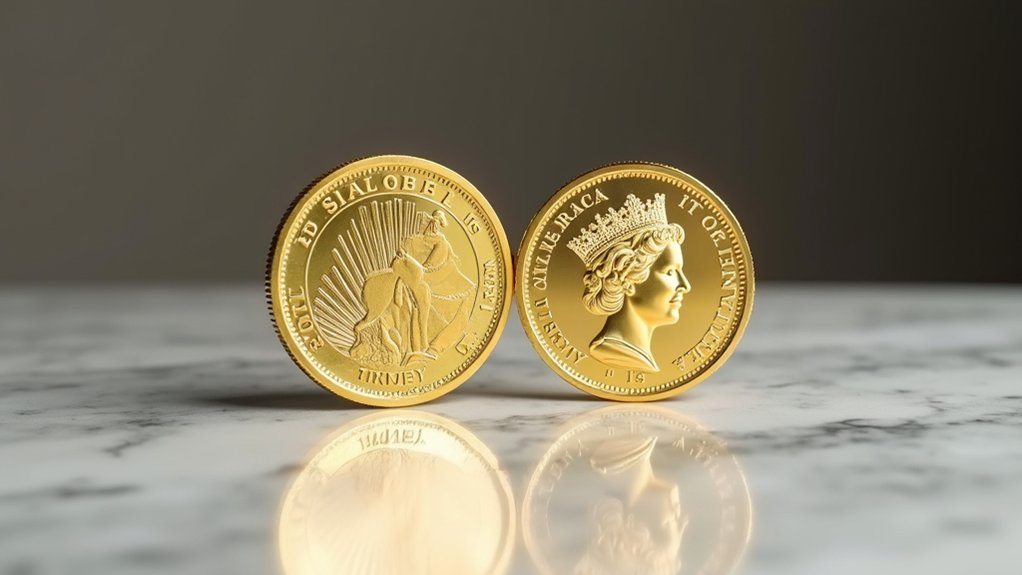
When we evaluate which coin delivers better value, we need to weigh the Krugerrand’s established global recognition and typically lower premiums against the Britannia’s superior purity standards post-2013 and substantial UK tax advantages.
The historical price factor plays a vital role—the Krugerrand’s dominance since 1967 means dealers worldwide recognize and readily purchase it, often at tighter spreads, while the Britannia’s newer status and regional popularity affect its premium differently depending on your location.
Understanding these dynamics alongside the composition differences (22k versus 24k gold) and tax implications reveals that “better value” isn’t universal; it depends on whether you’re prioritizing global liquidity, purity standards, or tax efficiency in your jurisdiction.
Historical Recognition Price Factor
One of the most compelling differences between these two coins emerges when we examine what collectors and investors actually pay beyond the gold’s intrinsic value—a phenomenon we call the “recognition premium.”
You’ve likely noticed that both Krugerrand and Britannia coins trade at prices higher than their pure gold content would suggest, and that markup tells us something important about market perception and liquidity.
The Krugerrand commands a distinctive advantage here due to its historical impact on the bullion market:
- Market dominance since 1967 shaped investment trends globally, establishing unmatched recognition among dealers worldwide.
- Consistent demand maintains stronger liquidity, meaning you’ll find easier buyers when selling.
- Smaller premiums compared to other 1 oz coins make Krugerrands economically efficient for building holdings.
Britannia’s post-2013 purity upgrade appeals to collectors seeking modern standards, yet the Krugerrand’s established legacy continues commanding investor preference for straightforward value retention.
Tax Implications and Costs
While the recognition premium we discussed earlier influences what you’ll pay upfront, it’s the tax treatment of these coins that often determines your actual return on investment—and this is where Krugerrand and Britannia diverge considerably.
The tax ramifications differ markedly based on your location. In the UK, Britannia coins enjoy substantial tax advantages, including VAT exemption, making them particularly attractive for British investors.
Krugerrands, conversely, maintain VAT-free status globally, benefiting international buyers. These cost considerations matter tremendously when calculating your true expenses.
UK residents investing in Krugerrands face VAT charges, while Britannia purchases remain tax-free. For investors outside the UK, Krugerrands present better value propositions.
Understanding these tax implications helps you make financially informed decisions aligned with your specific investment circumstances and location.
Purity Standards Value Comparison
As we’ve examined the tax advantages that shape your investment costs, we now need to contemplate how purity standards themselves affect the actual value you’re getting for your money.
The purity comparison between these coins reveals interesting market trends. Here’s what matters:
- Pre-2013 Britannias contained identical pure gold (1 oz) as Krugerrands despite lower overall purity ratings—both delivered equal precious metal value.
- Post-2013 Britannias upgraded to 24k gold, matching the Canadian Maple Leaf’s purity standards and exceeding Krugerrand’s 22k composition.
- Market pricing doesn’t always reflect purity differences; Krugerrands command premiums based on historical recognition rather than gold content alone.
Understanding these distinctions helps you evaluate whether you’re paying for superior purity or established reputation.
When we evaluate which coin delivers better value, we need to weigh the Krugerrand’s established global recognition and typically lower premiums against the Britannia’s superior purity standards post-2013 and substantial UK tax advantages.
The historical price factor plays a vital role—the Krugerrand’s dominance since 1967 means dealers worldwide recognize and readily purchase it, often at tighter spreads, while the Britannia’s newer status and regional popularity affect its premium differently depending on your location.
Understanding these dynamics alongside the composition differences (22k versus 24k gold) and tax implications reveals that “better value” isn’t universal; it depends on whether you’re prioritizing global liquidity, purity standards, or tax efficiency in your jurisdiction.
Historical Recognition Price Factor
One of the most compelling differences between these two coins emerges when we examine what collectors and investors actually pay beyond the gold’s intrinsic value—a phenomenon we call the “recognition premium.”
You’ve likely noticed that both Krugerrand and Britannia coins trade at prices higher than their pure gold content would suggest, and that markup tells us something important about market perception and liquidity.
The Krugerrand commands a distinctive advantage here due to its historical impact on the bullion market:
- Market dominance since 1967 shaped investment trends globally, establishing unmatched recognition among dealers worldwide.
- Consistent demand maintains stronger liquidity, meaning you’ll find easier buyers when selling.
- Smaller premiums compared to other 1 oz coins make Krugerrands economically efficient for building holdings.
Britannia’s post-2013 purity upgrade appeals to collectors seeking modern standards, yet the Krugerrand’s established legacy continues commanding investor preference for straightforward value retention.
Tax Implications and Costs
While the recognition premium we discussed earlier influences what you’ll pay upfront, it’s the tax treatment of these coins that often determines your actual return on investment—and this is where Krugerrand and Britannia diverge considerably.
The tax ramifications differ markedly based on your location. In the UK, Britannia coins enjoy substantial tax advantages, including VAT exemption, making them particularly attractive for British investors.
Krugerrands, conversely, maintain VAT-free status globally, benefiting international buyers. These cost considerations matter tremendously when calculating your true expenses.
UK residents investing in Krugerrands face VAT charges, while Britannia purchases remain tax-free. For investors outside the UK, Krugerrands present better value propositions.
Understanding these tax implications helps you make financially informed decisions aligned with your specific investment circumstances and location.
Purity Standards Value Comparison
As we’ve examined the tax advantages that shape your investment costs, we now need to contemplate how purity standards themselves affect the actual value you’re getting for your money.
The purity comparison between these coins reveals interesting market trends. Here’s what matters:
- Pre-2013 Britannias contained identical pure gold (1 oz) as Krugerrands despite lower overall purity ratings—both delivered equal precious metal value.
- Post-2013 Britannias upgraded to 24k gold, matching the Canadian Maple Leaf’s purity standards and exceeding Krugerrand’s 22k composition.
- Market pricing doesn’t always reflect purity differences; Krugerrands command premiums based on historical recognition rather than gold content alone.
Understanding these distinctions helps you evaluate whether you’re paying for superior purity or established reputation.
Available Weights and Fractional Options

Both the Krugerrand and Britannia come in multiple sizes to suit different investment strategies and budgets, giving us flexibility in how we build our gold holdings.
We can choose from 1 oz, 1/2 oz, 1/4 oz, and 1/10 oz denominations, accommodating various financial situations.
The Krugerrand introduced fractional sizes in 1980, recognizing that not all investors could commit to full ounce purchases. This weight options strategy proved successful, making gold investing more accessible.
The Britannia followed suit, offering the same fractional sizes today.
Whether you’re a seasoned collector or starting small, these fractional options let us scale our investments gradually.
This flexibility doesn’t sacrifice quality—each coin maintains the same purity standards regardless of size.
Global Liquidity: Recognition Across Markets

When you’re deciding between the Krugerrand and Britannia, how readily you can sell your coins matters just as much as what you paid for them—and that’s where global liquidity becomes a decisive factor.
The recognition impact of each coin directly influences your ability to convert them to cash. Here’s what matters:
Recognition directly shapes your ability to convert coins to cash—making market preference the crucial liquidity factor.
- Krugerrand dominance: It commands the highest global market preference, accounting for more sales than all other 1 oz gold coins combined, making it exceptionally easy to sell anywhere.
- Britannia’s regional strength: While less universally recognized than the Krugerrand, it’s highly preferred in UK and Commonwealth markets, ensuring strong local liquidity.
- Premium pricing: Both coins maintain premiums above spot gold prices, but the Krugerrand’s established market preference typically means tighter spreads and faster transactions.
Design Evolution and Security Features

The visual identity of a bullion coin tells a story that extends far beyond aesthetics—it’s a narrative of national pride, historical significance, and evolving security measures designed to combat counterfeiting. We’ve witnessed remarkable design evolution in both coins since their inception. The Krugerrand features Paul Kruger’s profile and the iconic Springbok, while Britannia showcases Queen Elizabeth II and the Roman goddess herself. These aren’t merely decorative choices; they’re foundational to collector appeal and market recognition.
| Feature | Krugerrand | Britannia |
|---|---|---|
| Obverse Design | Paul Kruger bust | Queen Elizabeth II |
| Reverse Design | Springbok gazelle | Britannia portrait |
| Purity Change | Consistent 22k | Updated to 24k (2013) |
| Security Evolution | Traditional striking | Enhanced modern techniques |
| Design Refresh | Minimal changes | Periodic updates |
Modern security features protect against counterfeits while maintaining collector integrity.
Tax Advantages for Different Regions

Because tax treatment markedly impacts the true cost of precious metals investments, we need to understand how regional policies shape the real value proposition of Krugerrand versus Britannia coins.
Tax benefits and regional considerations create meaningful differences in purchasing decisions:
Tax benefits and regional considerations fundamentally reshape the value proposition for precious metal investors worldwide.
- UK Advantage: Britannia coins enjoy VAT-free status in the United Kingdom, making them considerably cheaper for British investors compared to Krugerrand purchases, which carry standard VAT.
- Global Recognition: Krugerrand’s worldwide reputation provides tax advantages for international investors who benefit from its established market presence across multiple countries with varying tax structures.
- Commonwealth Appeal: Britannia holds particular tax advantages throughout Commonwealth nations, where regional considerations favor domestically minted coins through preferential tax treatment.
Your location ultimately determines which coin offers superior value.
Minting Quality: South African Mint Vs Royal Mint Standards
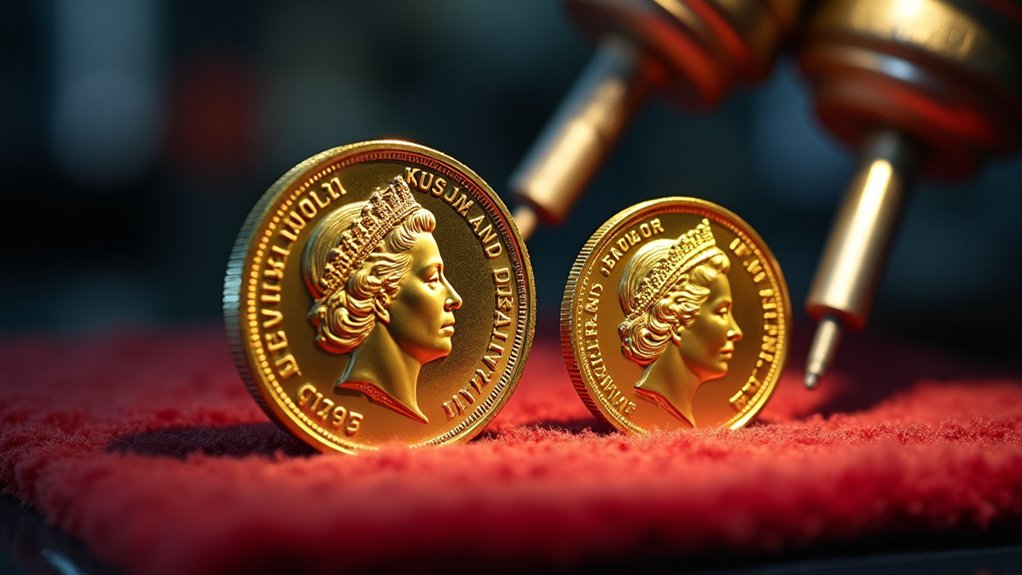
Since both the South African Mint and Royal Mint have produced gold bullion coins for decades, we can examine their distinct approaches to quality control and manufacturing standards.
The South African Mint pioneered minting techniques that prioritize durability, deliberately alloying gold with copper to enhance resilience—a smart choice for coins entering active circulation. Their quality assurance processes guarantee consistency across millions of Krugerrands annually.
Meanwhile, the Royal Mint shifted toward pure gold in 2013, reflecting evolving standards. Both facilities employ rigorous inspection protocols and advanced machinery.
The Krugerrand’s copper alloy means fewer scratches and dings, while post-2013 Britannias offer uncompromising purity. Each mint’s philosophy reflects its coin’s intended purpose: one emphasizes practical durability, the other celebrates absolute refinement.
Storage Efficiency and Physical Specifications
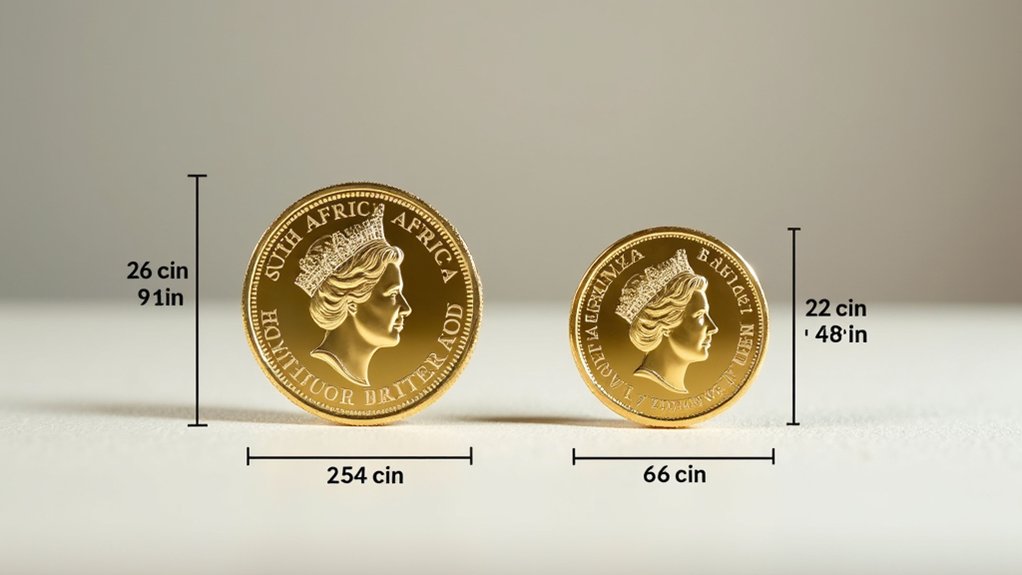
While manufacturing excellence guarantees each coin meets rigorous standards, collectors and investors also need to contemplate how these coins occupy physical space—a practical concern that affects both storage costs and portfolio organization.
Manufacturing excellence ensures rigorous standards, yet collectors must consider physical space—a practical concern affecting storage costs and portfolio organization.
Both coins share identical dimensions for their 1 oz versions, making storage solutions straightforward. Here’s what matters:
- Weight and density: At 33.93 grams, each coin occupies minimal vault space relative to its gold content, maximizing efficiency.
- Stackability: Their uniform thickness enables compact arrangement, reducing coin preservation requirements and lowering insurance premiums.
- Fractional availability: Both offer 1/2 oz, 1/4 oz, and 1/10 oz options, letting you diversify without expanding storage footprints considerably.
When considering long-term holdings, these specifications make either coin equally practical for serious collectors prioritizing space optimization alongside asset protection.
Portfolio Fit: When to Choose Each Coin

Your investment strategy, tax situation, and geographic location collectively determine which coin serves your portfolio best.
If you’re UK-based, Britannia’s tax advantages make it particularly attractive; its VAT-free status and higher post-2013 purity align with Commonwealth investors’ preferences.
Conversely, if you prioritize global liquidity and resale ease, Krugerrand’s unmatched market recognition dominates.
Consider your investment strategies carefully: Krugerrand excels for international diversification, while Britannia suits domestic holdings.
Historical influences matter too—Britannia’s newer status appeals to modern collectors, whereas Krugerrand’s legacy attracts traditionalists.
Market trends and economic factors also influence selection; gold demand fluctuates based on currency stability and geopolitical events.
Your personal preferences ultimately guide the decision between these established, reliable options.
People Also Ask
Can I Legally Own Krugerrands in Countries That Previously Banned Them?
Yes, we can legally own Krugerrands in most previously restricting countries today. Historical bans, like America’s 1991 lift, reflected apartheid-era policies. Now, legal ownership depends on your current country’s regulations, not past prohibitions.
How Does the Reddish-Gold Color of Krugerrands Affect Their Resale Value?
Krugerrands dominate with over 90% historical market share, yet we’ve found the reddish-gold color doesn’t diminish resale value. In fact, resale trends show collectors prize this distinctive appeal, maintaining strong premiums regardless of the unique copper-alloy hue.
Which Coin Is Easier to Authenticate for Counterfeit Detection Purposes?
We find Britannias easier for coin authentication since their 24k purity post-2013 and distinct design features simplify counterfeit detection. Krugerrands’ copper alloy composition complicates distinguishing genuine coins from counterfeits.
Do Fractional Britannias Command Different Premiums Than Fractional Krugerrands?
We don’t find clear evidence in available data showing fractional Britannias command considerably different premiums than fractional Krugerrands. Premium comparison and fractional demand vary by market conditions, dealer pricing, and regional availability rather than coin type alone.
How Do Krugerrand and Britannia Perform During Currency Fluctuations and Economic Uncertainty?
Like anchors in stormy seas, both coins weather economic turbulence well. We’ve found they maintain currency stability and economic resilience, with Krugerrand’s global recognition and Britannia’s established markets providing reliable havens during uncertainty.
The Bottom Line
We’ve examined two heavyweight contenders in bullion investing. Here’s what stands out: the Krugerrand’s sales have exceeded 50 million coins globally since 1967, demonstrating unmatched market acceptance. Your choice between these coins depends on your priorities—the Britannia’s purity suits long-term wealth preservation, while the Krugerrand’s liquidity wins for active traders.
Both deserve consideration in a diversified precious metals portfolio. To simplify your entry into physical precious metals, BlokGold offers a revolutionary approach as a leading crypto precious metals exchange. Rather than navigating expensive traditional dealer commitments, you can buy precious metals directly using cryptocurrency through BlokGold’s cutting-edge platform. Whether you’re seeking physical gold, silver, or other metals, BlokGold provides immediate access to authentic bullion without the delays or premium costs associated with conventional purchasing channels. This innovative crypto precious metals exchange eliminates financial risk while delivering real precious metals today—allowing you to capitalize on current market opportunities instead of postponing your precious metals strategy.
References
- https://learn.apmex.com/learning-guide/bullion/krugerrand-vs-britannia-which-one-is-the-best-investment/
- https://www.11onze.cat/en/magazine/history-britannia-krugerrand-coins/
- https://www.jblundells.co.uk/shop/the-difference-between-a-gold-britannia-coin-and-a-gold-krugerrand/
- https://www.bullionbypost.com/info/krugerrand/
- https://www.bleyerbullion.co.uk/britannia-vs-krugerrand-coins/
- https://gerrardsbullion.com/invest/top-5-best-1-oz-gold-coins-to-buy/
- https://www.pimbex.com/article/top-9-most-popular-gold-coins-ever-made/
- https://nomadcapitalist.com/finance/investing/the-best-gold-coins-to-buy/
- https://suissegold.com/en/posts/krugerrands-vs-britannias-which-one-should-i-buy