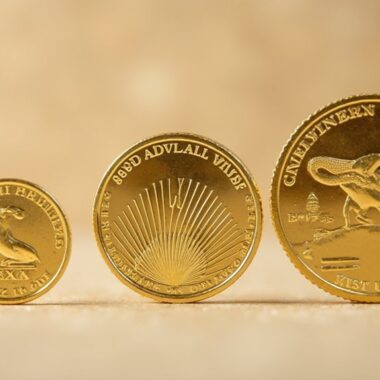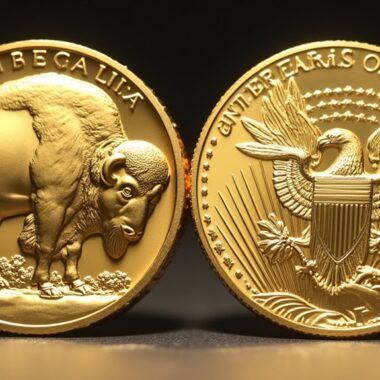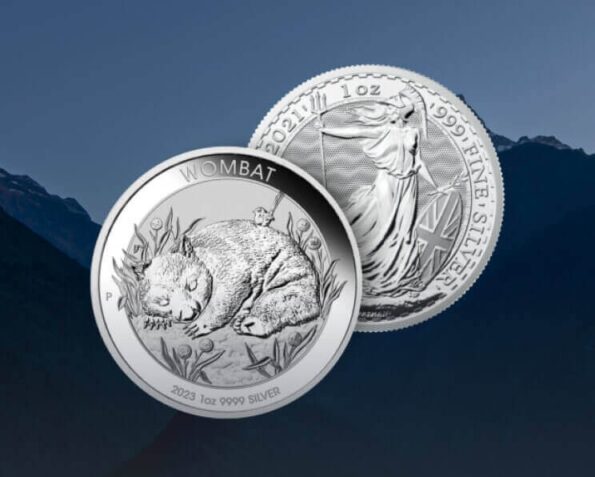

Choosing between gold bars and coins depends on your investment style. Bars offer lower premiums (2-5% versus coins’ 5-15%) and better cost-efficiency for large purchases, while coins provide superior liquidity and easier resale through broader buyer networks. Bars maximize vault space; coins work better for emergency access. We’d recommend considering your timeline and transaction frequency—accumulating wealth? Bars win. Need flexibility? Coins shine. The specifics of each option reveal deeper strategic advantages worth exploring.
Gold Bars: Manufactured Bullion Explained
Gold bars represent the backbone of modern bullion investment, and they’re fundamentally different from coins in both how they’re made and what they offer investors.
We find that manufacturers produce bars through two primary methods: cast bars and minted bars. Cast bars are created by pouring molten gold into molds, resulting in a more economical production process with minimal design elements. Minted bars undergo multiple strikes for precision and uniformity.
Both approaches deliver exceptional purity—typically 999.9 fine gold—at lower premiums than coins. The beauty of bars lies in their efficiency; they maximize your metal-to-premium ratio, making them ideal for serious investors prioritizing cost-effectiveness. Certified bars with good delivery status are preferred by investors for the resale market due to their verified authenticity and marketability. In contrast, coins from reputable mints like Perth Mint often command higher premiums due to their collectible nature and official face value. This premium reflects the additional value collectors assign to coins beyond their metal content, whereas bars focus primarily on delivering gold content value with minimal markup.
Whether you’re storing bars in a vault or executing large transactions, you’ll appreciate their straightforward verification and no-nonsense approach to precious metal investing.
Gold Coins: Government-Minted Investment Products

Unlike bars, which are fundamentally refined metal without official status, gold coins we’re discussing here carry government backing and legal tender designations—meaning they’re recognized as official currency in their respective countries. This adds a layer of authenticity and trust that’s hard to replicate.
We’ll explore how this official minting creates built-in security features and standardized purity guarantees (typically 99.99% for coins like the Canadian Maple Leaf and Austrian Philharmonic), making verification straightforward for buyers and sellers across the globe. The 1 oz Philharmoniker Gold Coin 2025, for example, is minted by Münze Österreich with a face value of 100 euro, demonstrating how government-issued coins provide both monetary recognition and metal authenticity.
Beyond their metal content, these coins often develop numismatic value over time, so we’re really looking at potential returns that extend past just the spot price of gold itself. Coins like the Perth Mint Lunar III series demonstrate how themed, limited-edition government-minted coins can appeal to both collectors and investors seeking unique pieces with potential appreciation beyond their gold content. The Gold Tientje from the Netherlands, produced by Koninklijke Nederlandse Munt, exemplifies how historical government-minted coins command a premium above their metal value due to their numismatic appeal and heritage significance.
Legal Tender Status Worldwide
One of the most distinctive advantages that separates investment-grade gold coins from their bullion bar counterparts is their official legal tender status, a designation that carries surprising practical and psychological weight in global markets.
We appreciate how this status creates meaningful legal implications and global acceptance benefits:
- Regulatory Recognition: Government backing guarantees coins meet strict purity standards, eliminating verification hassles during transactions across borders. The 99.99% gold purity standard exemplifies the rigorous metal composition requirements that government-minted coins must satisfy.
- Currency Utility: While rarely spent, coins function as legitimate currency, simplifying cross-border transport and reducing customs complications compared to bars. The brilliant uncirculated condition of newly minted coins further enhances their appeal as reliable stores of value across international markets.
- Market Liquidity: Their legal tender designation enhances global acceptance, making coins easier to liquidate quickly in informal markets where bars might face skepticism.
This official recognition doesn’t just protect your investment—it streamlines buying, selling, and international mobility substantially. Government-minted coins like the 1 oz Britannia Gold Coin exemplify how brilliant uncirculated legal tender pieces maintain premium valuations while offering practical utility beyond metal content.
Government Backing and Authentication
When a government mint produces a gold coin, it’s fundamentally putting its official stamp of approval on every aspect of the product—from the exact weight and purity to the authenticity of the metal itself.
We’re talking about institutions with centuries of credibility backing each coin that leaves their facilities.
This government guarantee dramatically reduces counterfeit risks, which plague the precious metals market.
While counterfeiters occasionally target popular coins, they’re far more likely to create fake bars since authentication requires specialized equipment.
Government mints employ sophisticated security features—unique designs, edge markings, and weight specifications—making forgery economically impractical.
When you purchase an official government coin like the Canadian Maple Leaf or Austrian Philharmonic, you’re getting institutional accountability.
The Austrian Philharmoniker, minted by Münze Österreich, demonstrates the investment-grade standards that government facilities maintain across their entire production line.
The Perth Mint’s 2024 Dragons Gold Coin exemplifies how modern mints apply rigorous specifications including precise purity standards and weight certification to ensure investor confidence.
Government-minted coins like the 2024 Mexican Libertad feature quality assurance measures that evaluate condition and influence buyer confidence in the secondary market.
That backing provides peace of mind that bars simply can’t match, especially valuable when reselling to dealers who instantly recognize legitimate government-issued products.
Collectible Value Beyond Metal
Beyond their intrinsic gold content, government-minted coins possess a dimension that bars simply don’t have: they can appreciate in value through numismatic characteristics—that is, their desirability to collectors based on rarity, historical significance, mintage numbers, and condition.
We’ve identified three key factors driving collectible appeal:
- Rarity and mintage: Lower production years command premium prices, especially for coins like early Australian Kangaroos or limited-edition Chinese Pandas. The 2022 Australian Kangaroo silver coin exemplifies this principle, with limited mintage of 5,000 pieces creating scarcity-driven collector demand.
- Condition grading: Uncirculated specimens noticeably outpace worn coins in market value. The Britannia Gold Coin, for instance, maintains its investment appeal even in good condition with minor superficial scratches or stains.
- Historical provenance: Coins tied to specific events or eras attract investment enthusiasm from numismatists worldwide.
While bars appreciate purely on metal weight and purity, coins blend bullion fundamentals with collector demand. For example, the 2025 Maple Leaf Gold Coin demonstrates this principle, commanding a premium of €182.32 above its metal value despite identical gold content to comparable bars.
This dual-value proposition means your coin portfolio potentially captures both gold price movements and numismatic appreciation simultaneously—something bars can’t replicate. Government-minted coins like those from the Royal Mint exemplify how official production backing enhances collector confidence and long-term value retention.
Unlike bars, which are fundamentally refined metal without official status, gold coins we’re discussing here carry government backing and legal tender designations—meaning they’re recognized as official currency in their respective countries. This adds a layer of authenticity and trust that’s hard to replicate.
We’ll explore how this official minting creates built-in security features and standardized purity guarantees (typically 99.99% for coins like the Canadian Maple Leaf and Austrian Philharmonic), making verification straightforward for buyers and sellers across the globe. The 1 oz Philharmoniker Gold Coin 2025, for example, is minted by Münze Österreich with a face value of 100 euro, demonstrating how government-issued coins provide both monetary recognition and metal authenticity.
Beyond their metal content, these coins often develop numismatic value over time, so we’re really looking at potential returns that extend past just the spot price of gold itself. Coins like the Perth Mint Lunar III series demonstrate how themed, limited-edition government-minted coins can appeal to both collectors and investors seeking unique pieces with potential appreciation beyond their gold content. The Gold Tientje from the Netherlands, produced by Koninklijke Nederlandse Munt, exemplifies how historical government-minted coins command a premium above their metal value due to their numismatic appeal and heritage significance.
Legal Tender Status Worldwide
One of the most distinctive advantages that separates investment-grade gold coins from their bullion bar counterparts is their official legal tender status, a designation that carries surprising practical and psychological weight in global markets.
We appreciate how this status creates meaningful legal implications and global acceptance benefits:
- Regulatory Recognition: Government backing guarantees coins meet strict purity standards, eliminating verification hassles during transactions across borders. The 99.99% gold purity standard exemplifies the rigorous metal composition requirements that government-minted coins must satisfy.
- Currency Utility: While rarely spent, coins function as legitimate currency, simplifying cross-border transport and reducing customs complications compared to bars. The brilliant uncirculated condition of newly minted coins further enhances their appeal as reliable stores of value across international markets.
- Market Liquidity: Their legal tender designation enhances global acceptance, making coins easier to liquidate quickly in informal markets where bars might face skepticism.
This official recognition doesn’t just protect your investment—it streamlines buying, selling, and international mobility substantially. Government-minted coins like the 1 oz Britannia Gold Coin exemplify how brilliant uncirculated legal tender pieces maintain premium valuations while offering practical utility beyond metal content.
Government Backing and Authentication
When a government mint produces a gold coin, it’s fundamentally putting its official stamp of approval on every aspect of the product—from the exact weight and purity to the authenticity of the metal itself.
We’re talking about institutions with centuries of credibility backing each coin that leaves their facilities.
This government guarantee dramatically reduces counterfeit risks, which plague the precious metals market.
While counterfeiters occasionally target popular coins, they’re far more likely to create fake bars since authentication requires specialized equipment.
Government mints employ sophisticated security features—unique designs, edge markings, and weight specifications—making forgery economically impractical.
When you purchase an official government coin like the Canadian Maple Leaf or Austrian Philharmonic, you’re getting institutional accountability.
The Austrian Philharmoniker, minted by Münze Österreich, demonstrates the investment-grade standards that government facilities maintain across their entire production line.
The Perth Mint’s 2024 Dragons Gold Coin exemplifies how modern mints apply rigorous specifications including precise purity standards and weight certification to ensure investor confidence.
Government-minted coins like the 2024 Mexican Libertad feature quality assurance measures that evaluate condition and influence buyer confidence in the secondary market.
That backing provides peace of mind that bars simply can’t match, especially valuable when reselling to dealers who instantly recognize legitimate government-issued products.
Collectible Value Beyond Metal
Beyond their intrinsic gold content, government-minted coins possess a dimension that bars simply don’t have: they can appreciate in value through numismatic characteristics—that is, their desirability to collectors based on rarity, historical significance, mintage numbers, and condition.
We’ve identified three key factors driving collectible appeal:
- Rarity and mintage: Lower production years command premium prices, especially for coins like early Australian Kangaroos or limited-edition Chinese Pandas. The 2022 Australian Kangaroo silver coin exemplifies this principle, with limited mintage of 5,000 pieces creating scarcity-driven collector demand.
- Condition grading: Uncirculated specimens noticeably outpace worn coins in market value. The Britannia Gold Coin, for instance, maintains its investment appeal even in good condition with minor superficial scratches or stains.
- Historical provenance: Coins tied to specific events or eras attract investment enthusiasm from numismatists worldwide.
While bars appreciate purely on metal weight and purity, coins blend bullion fundamentals with collector demand. For example, the 2025 Maple Leaf Gold Coin demonstrates this principle, commanding a premium of €182.32 above its metal value despite identical gold content to comparable bars.
This dual-value proposition means your coin portfolio potentially captures both gold price movements and numismatic appreciation simultaneously—something bars can’t replicate. Government-minted coins like those from the Royal Mint exemplify how official production backing enhances collector confidence and long-term value retention.
Purity Standards: Bars Vs Coins Compared

When we compare gold bars and coins, we’re really looking at two different approaches to purity that reflect their distinct purposes: bars maintain remarkably consistent fineness standards—typically 999.9 purity across virtually all denominations and producers—while coins vary considerably, with most modern government-minted coins hitting that same 999.9 mark (think Maple Leafs and Philharmonics).
Yet some coins like American Eagles and Krugerrands deliberately use 22-karat gold at 91.67% purity for durability.
This consistency advantage in bars matters because you’re getting predictable metal content every single time, whereas coin purity can depend on the country of origin and the specific issue, requiring you to verify each purchase against its specifications.
The takeaway? If standardized fineness across your entire collection is what matters to your investment strategy, bars deliver that reliability, but if you’re comfortable tracking varied purity levels, coins open up a broader range of options.
Investment-Grade Purity Standards
Two main purity standards dominate the investment gold market, and understanding the difference between them is essential for making informed purchasing decisions.
We’re looking at two primary categories when evaluating bar composition and coin security:
- 24-karat gold (999.9 purity) – Most modern bars and premium coins like the Canadian Maple Leaf meet this standard, offering maximum metal content and minimal impurities.
- 22-karat gold (916.7 purity) – Coins such as American Eagles and Krugerrands use this alloy, which enhances durability while maintaining substantial gold content.
- LBMA standard (995.0 purity minimum) – Larger bars often meet this specification, balancing purity with practical manufacturing requirements.
Higher purity doesn’t automatically mean better investment value.
We’ve found that 999.9 bars provide superior metal-to-premium ratios for bulk purchasing, while 22-karat coins offer enhanced longevity and legal tender status that collectors appreciate.
Coin Purity Variations Explained
The purity differences between gold coins and bars aren’t merely technical specifications—they’re fundamental design choices that shape how these investments perform in the real world.
We find that most investment-grade coins come in two purity grades: 99.99% (like the Maple Leaf and Philharmonic) or 91.67% for 22-karat pieces (Eagles and Krugerrands).
This historical context matters because 22-karat coins were traditionally designed for circulation and durability, while modern bullion coins prioritize pure gold content.
Bars, conversely, typically maintain 99.9% purity across denominations.
Understanding these variations helps you recognize that higher purity doesn’t automatically mean better value—it depends on your investment goals and whether you’re seeking numismatic or purely metallic worth.
Bar Fineness Consistency Advantages
Since gold bars operate under stricter international standardization regimens than coins do, they’ll consistently deliver the purity level you’re paying for—whether you’re buying a 1-kilogram LBMA Good Delivery bar (minimum 995.0 parts per thousand fineness) or a smaller 100-gram investment piece (typically 999.9 purity).
We appreciate this consistency because bar fineness standards eliminate guesswork.
The consistency benefits extend across several dimensions:
- Regulatory oversight: Bars follow LBMA or national mint standards, ensuring predictable metal content.
- Testing protocols: Refinery certifications guarantee stated fineness before bars reach market.
- Resale confidence: You’ll know exact gold content, simplifying future transactions.
Unlike coins where purity varies considerably—some featuring 99.99% while others contain only 91.67%—bars maintain uniform specifications.
This standardization means we’re investing in transparency. When you purchase investment-grade bars, you’re acquiring precisely what documentation promises.
When we compare gold bars and coins, we’re really looking at two different approaches to purity that reflect their distinct purposes: bars maintain remarkably consistent fineness standards—typically 999.9 purity across virtually all denominations and producers—while coins vary considerably, with most modern government-minted coins hitting that same 999.9 mark (think Maple Leafs and Philharmonics).
Yet some coins like American Eagles and Krugerrands deliberately use 22-karat gold at 91.67% purity for durability.
This consistency advantage in bars matters because you’re getting predictable metal content every single time, whereas coin purity can depend on the country of origin and the specific issue, requiring you to verify each purchase against its specifications.
The takeaway? If standardized fineness across your entire collection is what matters to your investment strategy, bars deliver that reliability, but if you’re comfortable tracking varied purity levels, coins open up a broader range of options.
Investment-Grade Purity Standards
Two main purity standards dominate the investment gold market, and understanding the difference between them is essential for making informed purchasing decisions.
We’re looking at two primary categories when evaluating bar composition and coin security:
- 24-karat gold (999.9 purity) – Most modern bars and premium coins like the Canadian Maple Leaf meet this standard, offering maximum metal content and minimal impurities.
- 22-karat gold (916.7 purity) – Coins such as American Eagles and Krugerrands use this alloy, which enhances durability while maintaining substantial gold content.
- LBMA standard (995.0 purity minimum) – Larger bars often meet this specification, balancing purity with practical manufacturing requirements.
Higher purity doesn’t automatically mean better investment value.
We’ve found that 999.9 bars provide superior metal-to-premium ratios for bulk purchasing, while 22-karat coins offer enhanced longevity and legal tender status that collectors appreciate.
Coin Purity Variations Explained
The purity differences between gold coins and bars aren’t merely technical specifications—they’re fundamental design choices that shape how these investments perform in the real world.
We find that most investment-grade coins come in two purity grades: 99.99% (like the Maple Leaf and Philharmonic) or 91.67% for 22-karat pieces (Eagles and Krugerrands).
This historical context matters because 22-karat coins were traditionally designed for circulation and durability, while modern bullion coins prioritize pure gold content.
Bars, conversely, typically maintain 99.9% purity across denominations.
Understanding these variations helps you recognize that higher purity doesn’t automatically mean better value—it depends on your investment goals and whether you’re seeking numismatic or purely metallic worth.
Bar Fineness Consistency Advantages
Since gold bars operate under stricter international standardization regimens than coins do, they’ll consistently deliver the purity level you’re paying for—whether you’re buying a 1-kilogram LBMA Good Delivery bar (minimum 995.0 parts per thousand fineness) or a smaller 100-gram investment piece (typically 999.9 purity).
We appreciate this consistency because bar fineness standards eliminate guesswork.
The consistency benefits extend across several dimensions:
- Regulatory oversight: Bars follow LBMA or national mint standards, ensuring predictable metal content.
- Testing protocols: Refinery certifications guarantee stated fineness before bars reach market.
- Resale confidence: You’ll know exact gold content, simplifying future transactions.
Unlike coins where purity varies considerably—some featuring 99.99% while others contain only 91.67%—bars maintain uniform specifications.
This standardization means we’re investing in transparency. When you purchase investment-grade bars, you’re acquiring precisely what documentation promises.
Premium Differences: Why Bars Often Cost Less

When we compare the premiums charged on gold bars versus gold coins, we’ll discover that bars typically command a lower markup over the spot price—usually 2-5% compared to coins’ 5-15% premium—and understanding why this difference exists helps us make smarter purchasing decisions.
Gold bars require simpler production processes: they’re cast or minted with minimal design elements, keeping manufacturing costs between 1-2% of spot price. Gold coins, meanwhile, demand intricate designs, multiple strikes, and sophisticated security features, driving production costs to 3-6%.
Gold bars’ simpler casting processes keep manufacturing costs at 1-2%, while coins’ intricate designs and security features drive costs to 3-6%.
These premium variances reflect production complexity rather than metal content. For investors prioritizing cost efficiency and maximum metal exposure, bars offer superior value.
However, coins’ premium differences matter less if collectibility and portability align with your investment preferences.
Liquidity Comparison: Ease of Resale

How easily can you convert your gold investment back to cash? That’s where liquidity becomes critical to your investment strategies.
We’ve found that coins generally outperform bars in resale potential, particularly in smaller denominations.
Here’s why coins win the liquidity race:
- Universal recognition – Governments back coins like the Canadian Maple Leaf and American Eagle, making them instantly identifiable worldwide
- Broader buyer network – Collectors, investors, and dealers actively seek coins, creating more demand channels than bars attract
- Informal market strength – Coins work better in private transactions and emerging markets where standardization matters less
Bars, while easier to verify through assay, require specialized dealers for quick sales.
If you’re building investment strategies emphasizing rapid conversion to cash, coins offer superior liquidity despite their higher premiums.
Recognizability and Authentication Concerns

While liquidity matters when you’re ready to sell, what happens before that moment—how easily someone can verify what you’re actually holding—shapes your entire investment experience. Gold coins benefit from inherent recognizability issues that bars can’t match. Government-backed coins like the Canadian Maple Leaf or American Eagle carry official branding and security features we instantly recognize. Bars, especially unmarked or generic ones, require more rigorous authentication methods to confirm purity and weight.
| Aspect | Gold Coins | Gold Bars |
|---|---|---|
| Recognition | Government branded, widely known | Generic appearance, harder to spot |
| Authentication | Built-in security features | Requires testing equipment |
| Verification Speed | Quick visual inspection | Time-intensive analysis |
| Counterfeiting Risk | Lower due to complexity | Higher for unmarked bars |
| Buyer Confidence | Immediate trust established | Demands professional verification |
This distinction matters considerably when you’re negotiating sales or building trust with potential buyers.
Storage Efficiency: Space and Security Considerations

Because your gold investment sits dormant until you decide to sell, the physical space it occupies and how you protect it become practical concerns that directly affect your overall investment strategy.
We’ve found that storage security and space optimization matter considerably for different holdings.
Consider these factors:
- Density advantage: Gold bars pack more metal into compact dimensions, making them ideal for vault storage where every cubic inch counts.
- Security scaling: Larger bar holdings require fewer individual items to monitor, reducing handling points and simplifying inventory management.
- Access trade-offs: Coins offer easier fractional selling and portability, while bars demand wholesale-level transactions for efficient liquidation.
We’d recommend evaluating your storage capacity and security infrastructure before deciding between these formats.
Available Sizes: Bars From 1g to 1 Kilo Vs Coin Denominations

Once you’ve settled on your storage setup, the size options available to you become the next practical decision point—and they’ll shape how flexibly you can buy, sell, and manage your holdings.
Gold bars offer remarkable versatility through bar weight options, ranging from tiny 1-gram pieces up to substantial 1-kilogram ingots. This granularity lets you match purchases precisely to your budget and investment goals.
Coins, meanwhile, provide standardized denominations—typically 1 ounce across most popular designs—though coin design variations add numismatic appeal. For fractional investing under an ounce, bars win decisively; you’ll find 10-gram, 20-gram, and 50-gram options easily.
Coins work better if you’re buying round quantities and value government backing. Understanding these differences helps you construct a portfolio matching your specific needs.
Which Product Type Suits Different Investment Goals

Your investment goals—whether you’re building a long-term wealth reserve, creating an emergency fund, or assembling a diversified portfolio—should directly determine whether you choose bars or coins, because each product type offers distinct advantages that align with different financial strategies.
Your investment goals directly determine whether bars or coins best align with your financial strategy and wealth-building approach.
Consider these investment strategies:
- Large acquisitions benefit from bars’ superior metal-to-premium ratio, reducing costs when purchasing significant quantities.
- Emergency liquidity favors coins’ easier global recognition and informal market acceptance.
- Vault efficiency aligns with bars’ compact storage, maximizing space utilization for institutional investors.
Market trends increasingly show serious investors favoring bars for wealth accumulation while keeping coins for accessibility.
We’re witnessing a shift where portfolio diversification incorporates both, leveraging each product’s strengths.
Your financial timeline and transaction frequency ultimately determine which option maximizes your return potential.
People Also Ask
Can I Use Gold Coins as Legal Tender for Actual Purchases or Transactions?
While gold coins carry legal tender status, we’d face significant transaction limitations in practice. Most merchants won’t accept them; their gold coin acceptance remains rare outside numismatic dealers, making them impractical for everyday purchases.
How Do Production Costs for Bars Versus Coins Affect Their Long-Term Investment Value?
We’ll find that coins cost 3-6% to produce versus bars’ 1-2%, yet this production cost difference shrinks over time. You’re actually investing in identical gold content—the premium gap narrows as long-term value depends purely on metal purity.
What Are the Specific Dimension Differences Between a 1 Oz Bar and Coin?
We find 1 oz bars typically measure 38×22×2.3mm, while coins vary by design but generally present circular profiles. Despite identical weight specifications, bars’ rectangular form maximizes storage efficiency compared to coins’ dimensional bulk.
Do Fractional Bars Like Combibars Offer Better Premiums Than Their Coin Equivalents?
We’ll cut to the chase: fractional bar premiums typically run 3-4% versus coins at 6-8%, making them superior for your gold investment strategy. CombiBars deliver exceptional value in smaller denominations.
Which Gold Products Are Best Suited for Inheritance or Passing Wealth to Heirs?
We’d recommend gold coins for inheritance planning because they’re government-backed, globally recognized, and legally recognized as tender. Their numismatic value and portability make wealth transfer to heirs straightforward and internationally accepted.
The Bottom Line
We’ve discovered that the “perfect” gold investment doesn’t exist—it’s tailored to you. Bars offer cost efficiency; coins provide portability. Here’s the irony: spending less on bars means potentially spending more on storage, while pricier coins fit your pocket. We’re fundamentally choosing between different trade-offs, not between right and wrong.
Your investment goals, storage capacity, and liquidity needs determine which form genuinely serves you best. With BlokGold’s crypto precious metals exchange platform, you can buy precious metals directly without the inflated markups of traditional dealers. Our cutting-edge precious metals purchasing system lets you access physical gold, silver, and other metals immediately—no waiting for future market opportunities or making expensive long-term commitments. Whether you prefer bars or coins, BlokGold eliminates the financial risk associated with conventional precious metals dealers by offering transparent pricing and instant access to real physical precious metals through cryptocurrency transactions. Choose the form that suits your needs, then secure it affordably through BlokGold’s streamlined precious metals exchange.
References
- https://www.gold-analytix.com/bar-dimensions-weights
- https://www.mgsrefining.com/blog/standard-gold-bar-sizes-weight-a-comprehensive-guide/
- https://www.lbma.org.uk/publications/good-delivery-rules/technical-specifications
- https://www.usgoldbureau.com/content/gold-bar-weight
- https://goldbarsworldwide.com/PDF/BG_10_Categories.pdf
- https://www.providentmetals.com/knowledge-center/precious-metals-resources/gold-bar-sizes-prices.html
- https://www.goldcore.com/our-products/gold-bars
- https://www.monex.com/knowledge/1-kilo-gold-bars-purity-specs-standardization/