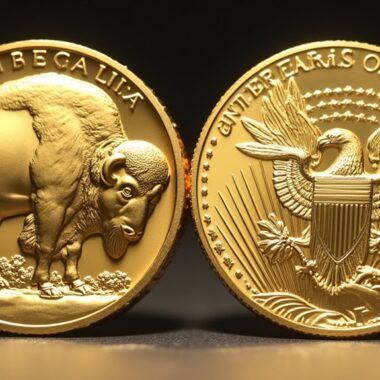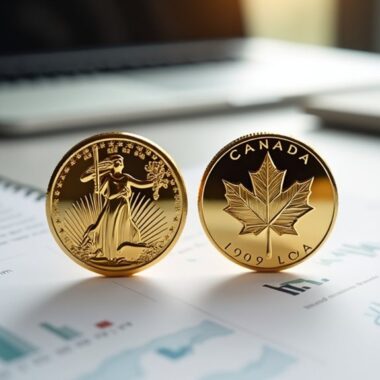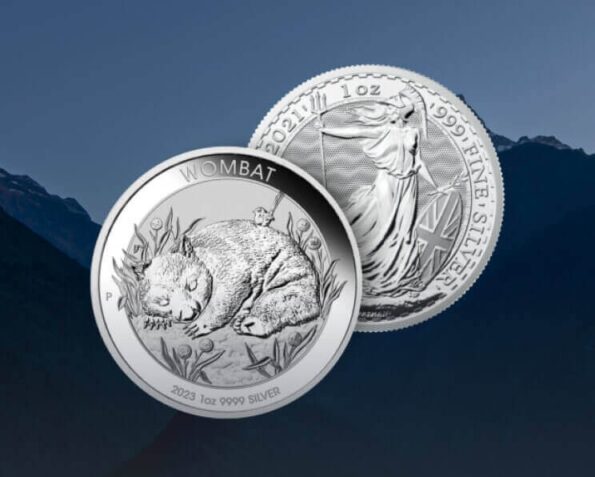
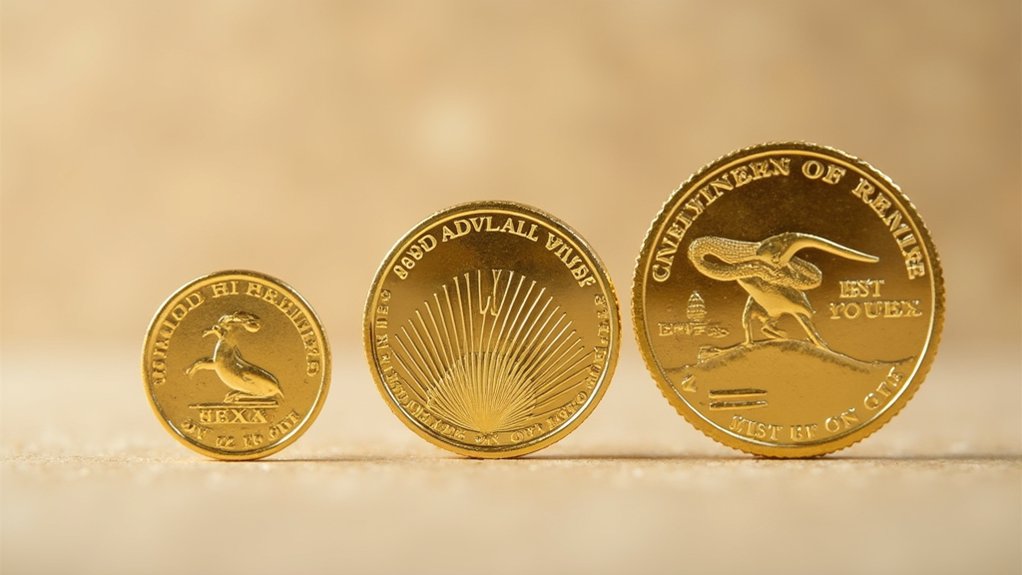
We’ve found that fractional gold coins—1/10 oz, 1/4 oz, and 1/2 oz denominations—offer accessible entry points into precious metals investing. These smaller sizes from trusted brands like American Eagles require minimal storage space, enjoy strong market liquidity, and let you build positions gradually. While premiums per ounce run higher than larger coins due to minting and handling costs, the flexibility for strategic selling and portfolio diversification makes them practical. Understanding how each denomination fits different investment goals reveals why they’re becoming investor favorites.
Understanding Fractional Gold Coins: What They Are and Why They Matter
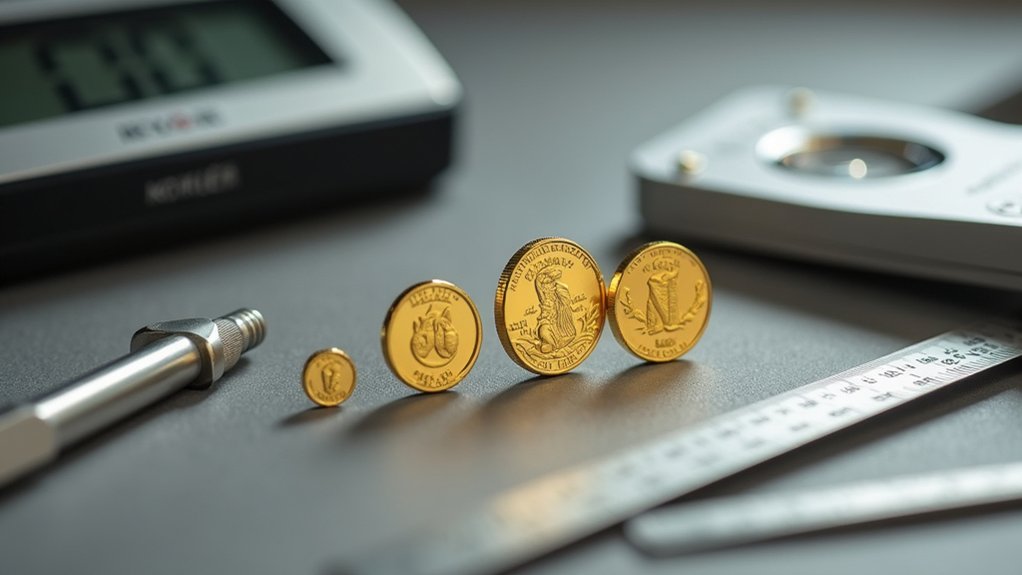
Fractional gold coins—those smaller denominations containing less than one troy ounce of gold—represent a practical gateway into precious metals investing that we often overlook when we’re focused on larger holdings.
We’re talking about sizes like 1/10 oz, 1/4 oz, and 1/2 oz coins, available in both troy ounce and gram measurements. Here’s why they matter: they lets align our purchases with specific investment goals without requiring thousands of dollars upfront.
As market trends shift toward accessibility and flexibility, fractional coins have gained traction among investors who want to build positions gradually. Whether you’re starting out or diversifying an existing portfolio, these smaller pieces offer meaningful entry points into gold ownership that larger denominations simply can’t match. Like silver coins with limited mintage, fractional gold coins also appeal to collectors seeking rare pieces that may appreciate over time due to their scarcity and craftsmanship. The 99.99% gold purity standard found in premium fractional coins ensures that your investment maintains consistent quality and value across different denominations. Premium fractional coins from recognized smelters like Umicore demonstrate that quality assurance and traceability remain important factors even in smaller gold investments.
1/10 Oz, 1/4 Oz, and 1/2 Oz Gold Coins: Size, Weight, and Physical Comparisons

When we’re comparing gold coins side by side, the physical dimensions become surprisingly important—they’ll help you understand not just what you’re holding, but how these pieces fit into your overall investment strategy.
Our size specifications and weight comparisons reveal practical distinctions:
- 1/2 oz coin: Nearly a quarter’s width but noticeably thicker, weighing 15.55g—equivalent to three quarters combined
- 1/4 oz coin: Similar to a nickel’s diameter, tipping the scales at 7.78g with roughly 1.5 times a quarter’s heft
- 1/10 oz coin: Slightly smaller than a dime, weighing just 3.11g yet about 50% heavier than that dime
These weight comparisons matter because they determine storage requirements, portability, and how comfortably you’ll handle your investment. The American Eagle Gold Coin in 1/2 oz denomination maintains 91.67% gold purity while offering a substantial 27mm diameter for collectors seeking larger fractional pieces. Proof quality coins like those from the Perth Mint are struck one by one with special dies to achieve the highest craftsmanship standards. Royal Canadian Mint coins offer buyback guarantee protection for investors concerned about future liquidity.
Understanding these physical attributes helps you make informed decisions about which denominations suit your particular needs.
When we’re comparing gold coins side by side, the physical dimensions become surprisingly important—they’ll help you understand not just what you’re holding, but how these pieces fit into your overall investment strategy.
Our size specifications and weight comparisons reveal practical distinctions:
- 1/2 oz coin: Nearly a quarter’s width but noticeably thicker, weighing 15.55g—equivalent to three quarters combined
- 1/4 oz coin: Similar to a nickel’s diameter, tipping the scales at 7.78g with roughly 1.5 times a quarter’s heft
- 1/10 oz coin: Slightly smaller than a dime, weighing just 3.11g yet about 50% heavier than that dime
These weight comparisons matter because they determine storage requirements, portability, and how comfortably you’ll handle your investment. The American Eagle Gold Coin in 1/2 oz denomination maintains 91.67% gold purity while offering a substantial 27mm diameter for collectors seeking larger fractional pieces. Proof quality coins like those from the Perth Mint are struck one by one with special dies to achieve the highest craftsmanship standards. Royal Canadian Mint coins offer buyback guarantee protection for investors concerned about future liquidity.
Understanding these physical attributes helps you make informed decisions about which denominations suit your particular needs.
Major Fractional Gold Coin Types: American Eagle, Maple Leaf, Krugerrand, and Beyond

Several government-minted options dominate the fractional gold coin market, and each brings its own characteristics to your investment portfolio.
The American Eagle stands as the most accessible choice, offering fractional sizes in 1/10, 1/4, and 1/2 ounce denominations with guaranteed legal tender status.
Canada’s Maple Leaf rivals the Eagle with exceptional purity and slightly varying diameters across sizes. The Maple Leaf contains 99.99% gold purity and is minted by the Royal Canadian Mint, making it a highly sought-after option for serious investors.
South Africa’s Krugerrand provides historical prestige, particularly in the 1/4 ounce format.
We shouldn’t overlook the Australian Kangaroo and European Philharmonic options, which appeal to collectors seeking geographic diversity. Austria’s Philharmoniker coin, minted by Münze Österreich, offers 99.99% gold purity in fractional denominations suitable for investment portfolios.
The British Britannia coin, minted by the Royal Mint with 99.99% gold purity, represents another premium option for discerning investors.
These investment advantages—global recognition, liquidity, and government backing—make major minted coins superior choices for building a balanced fractional portfolio.
Your selection ultimately depends on personal preference and accessibility within your market.
Several government-minted options dominate the fractional gold coin market, and each brings its own characteristics to your investment portfolio.
The American Eagle stands as the most accessible choice, offering fractional sizes in 1/10, 1/4, and 1/2 ounce denominations with guaranteed legal tender status.
Canada’s Maple Leaf rivals the Eagle with exceptional purity and slightly varying diameters across sizes. The Maple Leaf contains 99.99% gold purity and is minted by the Royal Canadian Mint, making it a highly sought-after option for serious investors.
South Africa’s Krugerrand provides historical prestige, particularly in the 1/4 ounce format.
We shouldn’t overlook the Australian Kangaroo and European Philharmonic options, which appeal to collectors seeking geographic diversity. Austria’s Philharmoniker coin, minted by Münze Österreich, offers 99.99% gold purity in fractional denominations suitable for investment portfolios.
The British Britannia coin, minted by the Royal Mint with 99.99% gold purity, represents another premium option for discerning investors.
These investment advantages—global recognition, liquidity, and government backing—make major minted coins superior choices for building a balanced fractional portfolio.
Your selection ultimately depends on personal preference and accessibility within your market.
Premium Differences Across Fractional Sizes and Their Long-Term Impact

Why do smaller gold coins cost more per ounce than their larger counterparts? Our premium analysis reveals several factors driving this investment impact.
Minting costs stay relatively constant regardless of size, so fractional coins distribute these expenses across fewer ounces of gold. Additionally, dealers face higher handling and packaging costs for smaller denominations.
Fractional coins distribute constant minting costs across fewer ounces, while higher handling and packaging expenses further increase dealer premiums.
Consider these cost factors:
- Manufacturing overhead proportionally increases for 1/10 oz coins compared to 1 oz pieces
- Packaging and individual labeling expenses add significant percentage premiums
- Dealer markups reflect increased time managing smaller transactions
Over time, these premiums accumulate substantially. Similar to how collectible coins command premium pricing above their metal value, fractional gold coins require dealers to account for elevated operational costs in their pricing structures. The 1/10 troy ounce size, for example, carries a premium value of €79.67 above its gold content, demonstrating how smaller denominations significantly impact overall investment costs. The 1/2 oz Britannia Gold Coin exemplifies this pattern, with a 99.99% purity standard reflecting the high-quality gold content used across fractional denominations.
An investor purchasing fractional coins consistently pays more per troy ounce than someone buying larger sizes. While fractional coins offer accessibility and flexibility, understanding this long-term cost difference helps you strategically balance your portfolio between smaller and larger denominations.
Why do smaller gold coins cost more per ounce than their larger counterparts? Our premium analysis reveals several factors driving this investment impact.
Minting costs stay relatively constant regardless of size, so fractional coins distribute these expenses across fewer ounces of gold. Additionally, dealers face higher handling and packaging costs for smaller denominations.
Fractional coins distribute constant minting costs across fewer ounces, while higher handling and packaging expenses further increase dealer premiums.
Consider these cost factors:
- Manufacturing overhead proportionally increases for 1/10 oz coins compared to 1 oz pieces
- Packaging and individual labeling expenses add significant percentage premiums
- Dealer markups reflect increased time managing smaller transactions
Over time, these premiums accumulate substantially. Similar to how collectible coins command premium pricing above their metal value, fractional gold coins require dealers to account for elevated operational costs in their pricing structures. The 1/10 troy ounce size, for example, carries a premium value of €79.67 above its gold content, demonstrating how smaller denominations significantly impact overall investment costs. The 1/2 oz Britannia Gold Coin exemplifies this pattern, with a 99.99% purity standard reflecting the high-quality gold content used across fractional denominations.
An investor purchasing fractional coins consistently pays more per troy ounce than someone buying larger sizes. While fractional coins offer accessibility and flexibility, understanding this long-term cost difference helps you strategically balance your portfolio between smaller and larger denominations.
Liquidity and Marketability of Fractional Gold Coins in Today’s Market

Because fractional gold coins occupy a unique position between pure bullion investment and collectible numismatics, they offer distinct liquidity advantages that we don’t see with larger denominations.
Current liquidity trends show strong market demand for 1/10 oz, 1/4 oz, and 1/2 oz coins, particularly from newer investors entering the precious metals space. We’ve observed that dealers actively purchase these sizes because they appeal to a broader customer base seeking affordable entry points.
The fractional market benefits from government-minted coins like American Gold Eagles and Canadian Maple Leafs, which maintain exceptional brand recognition globally. These coins are typically delivered in original packaging to ensure authenticity and preserve their brilliant uncirculated condition. Coins like the Perth Mint’s offerings achieve 99.99% purity standards, reinforcing consumer confidence in fractional denominations.
This widespread recognition translates directly into faster transaction times when you’re ready to sell. Unlike niche collectibles, fractional coins convert to cash quickly through reputable dealers, online platforms, and local coin shops, making them genuinely practical for portfolio adjustments.
The investment score assigned to coins reflects their quality and market desirability, with higher ratings indicating better liquidity potential in secondary markets.
Because fractional gold coins occupy a unique position between pure bullion investment and collectible numismatics, they offer distinct liquidity advantages that we don’t see with larger denominations.
Current liquidity trends show strong market demand for 1/10 oz, 1/4 oz, and 1/2 oz coins, particularly from newer investors entering the precious metals space. We’ve observed that dealers actively purchase these sizes because they appeal to a broader customer base seeking affordable entry points.
The fractional market benefits from government-minted coins like American Gold Eagles and Canadian Maple Leafs, which maintain exceptional brand recognition globally. These coins are typically delivered in original packaging to ensure authenticity and preserve their brilliant uncirculated condition. Coins like the Perth Mint’s offerings achieve 99.99% purity standards, reinforcing consumer confidence in fractional denominations.
This widespread recognition translates directly into faster transaction times when you’re ready to sell. Unlike niche collectibles, fractional coins convert to cash quickly through reputable dealers, online platforms, and local coin shops, making them genuinely practical for portfolio adjustments.
The investment score assigned to coins reflects their quality and market desirability, with higher ratings indicating better liquidity potential in secondary markets.
Storage, Transportation, and Portfolio Flexibility Benefits

While larger gold holdings demand serious security considerations and dedicated storage solutions, fractional coins offer us a fundamentally different approach to precious metals ownership that streamlines the entire experience.
We benefit from several practical advantages:
- Storage convenience: Fractional coins occupy minimal space, fitting easily into home safes, safe deposit boxes, or portable containers without requiring expensive vault arrangements.
- Portfolio flexibility: We can sell portions of our holdings strategically without liquidating entire positions, allowing us to respond to market opportunities or personal financial needs.
- Transaction practicality: Smaller denominations facilitate exchanges in real-world scenarios, making them suitable for barter situations or inheritance distribution among family members.
This accessibility transforms how we approach precious metals investing.
The reduced physical footprint means we’re not constrained by storage limitations that typically accompany larger positions, enabling more dynamic portfolio management.
While larger gold holdings demand serious security considerations and dedicated storage solutions, fractional coins offer us a fundamentally different approach to precious metals ownership that streamlines the entire experience.
We benefit from several practical advantages:
- Storage convenience: Fractional coins occupy minimal space, fitting easily into home safes, safe deposit boxes, or portable containers without requiring expensive vault arrangements.
- Portfolio flexibility: We can sell portions of our holdings strategically without liquidating entire positions, allowing us to respond to market opportunities or personal financial needs.
- Transaction practicality: Smaller denominations facilitate exchanges in real-world scenarios, making them suitable for barter situations or inheritance distribution among family members.
This accessibility transforms how we approach precious metals investing.
The reduced physical footprint means we’re not constrained by storage limitations that typically accompany larger positions, enabling more dynamic portfolio management.
Building a Balanced Precious Metals Strategy With Fractional Denominations

Now that we’ve established how fractional coins simplify the mechanics of owning precious metals, we can focus on leveraging them strategically to construct a well-rounded portfolio.
| Denomination | Best Use Case | Investor Mindset |
|---|---|---|
| 1/10 oz | Dollar-cost averaging | Growth-focused |
| 1/4 oz | Balanced accumulation | Value-conscious |
| 1/2 oz | Strategic reserves | Long-term preservation |
We’ll want to combine fractional sizes based on current market trends and your financial goals. Smaller denominations let you capitalize on price fluctuations through regular purchases, while larger fractions provide efficient storage and handling. This tiered approach maximizes liquidity without sacrificing accumulation efficiency. You’re fundamentally building flexibility into your portfolio—the ability to sell selective portions during market opportunities or hold core positions through volatility. Fractional coins complement traditional holdings, creating redundancy and strategic depth.
People Also Ask
Can Fractional Gold Coins Be Used as Legal Tender for Everyday Purchases?
We can confirm that fractional gold coins carry legal tender status—American Gold Eagles, for instance, possess official face values. However, we’d advise against using them for everyday purchases since their actual gold value far exceeds their fractional currency denominations.
How Do Fractional Gold Coins Perform During Economic Recessions or Market Crashes?
We’ve seen fractional gold coins maintain value during downturns through their historical performance as safe-haven assets. Investor sentiment shifts toward precious metals during recessions, driving demand and supporting prices across all denominations.
What Are the Tax Implications of Buying and Selling Fractional Gold Coins?
We’ll tell you that 28% of gold investors overlook tax implications entirely. You’ll need detailed purchase records for fractional coins, as they’re subject to capital gains taxes. We recommend consulting a tax professional about your specific tax implications when selling.
How Can I Authenticate Fractional Gold Coins to Ensure They’re Genuine?
We recommend you use professional coin grading services for authenticity methods. They’ll examine weight, dimensions, and mint marks. We also suggest comparing your fractional coins against certified specimens to verify genuineness.
Which Fractional Gold Coin Size Offers the Best Resale Value Over Time?
We’ve found that 1/4 oz and 1/2 oz coins offer superior resale value because they balance affordability with strong market demand. Their resale trends show better liquidity than 1/10 oz sizes while maintaining lower premiums than full ounces.
The Bottom Line
We’ve explored how fractional gold coins—like seeds from a larger tree—grow your portfolio’s flexibility and liquidity. These smaller denominations aren’t just convenient; they’re strategic building blocks. Whether you’re diversifying holdings or maximizing accessibility, fractional coins anchor your precious metals strategy. They represent wealth’s democratization: you don’t need massive capital to start.
With BlokGold, accessing physical precious metals has never been easier. As a leading crypto precious metals exchange, BlokGold lets you buy precious metals with cryptocurrency, eliminating the expensive markups and lengthy processes traditional dealers impose. Instead of waiting for future market opportunities or committing to costly dealer arrangements, you gain immediate access to physical gold, silver, and other metals through cutting-edge precious metals purchasing today.
As markets shift, these coins remain steadfast vessels of value, bridging affordability with security. BlokGold removes the financial barriers and risk associated with conventional precious metals acquisition, enabling you to build your real asset portfolio instantly. Whether you’re purchasing fractional coins or larger denominations, our crypto precious metals exchange provides transparent pricing and direct access to the physical metals that strengthen your wealth foundation.
References
- https://learn.apmex.com/learning-guide/bullion/what-are-fractional-coin-sizes/
- https://www.sbcgold.com/blog/fractional-gold-what-is-it-is-it-worth-an-investment/
- https://www.bullionmax.com/kb/gold-coin-size-comparison/
- https://www.physicalgold.com/insights/how-many-types-of-gold-coins-are-there/
- https://www.americanhartfordgold.com/what-size-gold-coins-should-i-buy/
- https://bullionexchanges.com/learn/fractional-vs-1-oz-gold-coins-which-is-the-better-investment
- https://springhillcoinshop.com/american-gold-eagle-1-10-oz-vs-other-fractional-gold-coins-whats-best-for-you/
- https://www.bullion.com/gold/gold-coins/fractional-gold-coins