
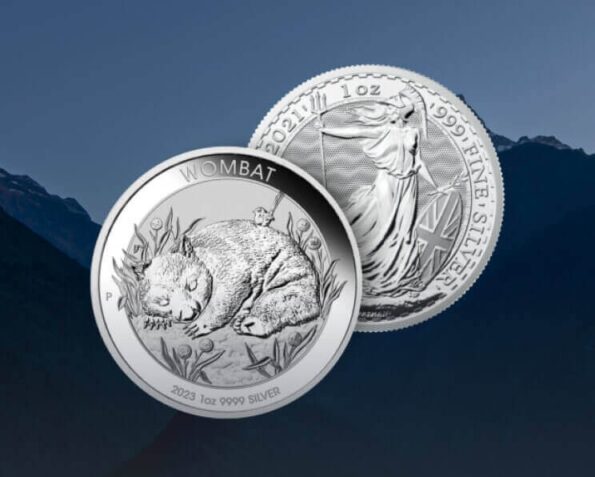

We’ll need to balance risk and reward when choosing between silver mining stocks and physical silver ownership. Mining stocks offer higher potential returns through operational leverage but come with increased volatility and company-specific risks. Physical silver provides tangible asset ownership with stable value preservation and crisis protection. While mining stocks can deliver explosive gains in bull markets, physical silver offers portfolio stability and eliminates counterparty risk. Your investment choice depends on whether you’re seeking growth or preservation – let’s explore the details.
Understanding the Silver Investment Landscape

Two distinct approaches dominate the silver investment landscape: mining stocks and physical ownership.
We’re seeing silver market trends that highlight key differences between these options. Mining stocks offer higher potential returns through market leverage but come with increased volatility and operational risks. Physical silver provides tangible asset ownership with typically more stable value preservation. Silver’s dual role as both an industrial and ornamental metal creates diverse demand channels that influence investment value. The market currently shows a structural supply deficit of 117.6 million ounces, affecting both investment vehicles.
When it comes to investment timing, we’ve found that mining stocks react more dramatically to market shifts, making them suitable for active traders who can monitor daily fluctuations. Government-minted coins consistently maintain higher premiums compared to other physical silver options due to their legal tender status.
Physical silver, meanwhile, serves as a long-term store of value, though it requires consideration of storage and insurance costs.
Understanding these dynamics helps us make informed decisions – after all, we wouldn’t want to put all our silver eggs in one mining basket.
The Case for Physical Silver Holdings

While market volatility often creates uncertainty, physical silver holdings provide a bedrock of tangible value and direct ownership that’s unmatched by paper alternatives. As a tangible asset, physical silver eliminates counterparty risk and offers immediate possession without depending on financial institutions or third parties. We’ve found that ownership security becomes paramount during economic turbulence. The metal’s widespread use in industrial applications ensures sustained demand across multiple sectors. Silver’s remarkable electrical conductivity makes it irreplaceable in modern electronics and technology. Research shows that low daily volatility makes physical precious metals more stable than traditional stocks during market crashes.
| Benefit | Impact |
|---|---|
| Direct Control | No intermediary risk |
| Inflation Protection | Preserves purchasing power |
| Crisis Hedge | Safeguards wealth |
| Portfolio Balance | Reduces overall risk |
When you hold physical silver, you’re securing real value that can’t be diluted or compromised by market manipulation. It’s a time-tested store of wealth that offers both portfolio diversification and protection against systemic financial risks. We’ve learned that silver’s dual role as both an industrial metal and monetary asset strengthens its position as a strategic investment holding.
Mining Stock Fundamentals and Performance

Understanding mining stock fundamentals requires careful analysis of several key performance indicators that drive company valuations and long-term success.
We look for companies demonstrating solid production metrics through consistent output growth and development of new projects. Cost management, particularly all-in sustaining costs per ounce, tells us how efficiently a miner operates and whether they’ll survive price downturns.
We’ve learned that the strongest performers maintain geographic diversification to minimize regional risks while embracing technological advances like AI and automation. With rising industrial demands, miners must adapt to meet growing needs from sectors like electric vehicle production and photovoltaics. Companies leveraging satellite monitoring are showing improved environmental compliance and operational efficiency.
When evaluating miners, we focus on their working capital strength and disciplined capital allocation – companies like Pan American Silver show us what good fundamentals look like with their $1.16 billion working capital position and clear production targets of 20-21 million ounces for 2025.
Risk-Return Analysis Between Options

Let’s examine how mining stocks and physical silver stack up in the critical trade-off between potential returns and risk exposure.
While mining stocks offer leveraged upside through their operational gearing, with historical cases showing gains of 2-3x the movement in silver prices during bull markets, they’re also vulnerable to company-specific setbacks that can torpedo performance regardless of metal prices. Investors should carefully watch for frequent management changes that could signal deeper organizational problems.
Physical silver provides a more stable store of value with direct exposure to price appreciation, though it sacrifices the explosive growth potential that well-managed miners can deliver during strong market conditions. Unlike ETFs which incur ongoing management fees, physical silver ownership requires only initial acquisition costs.
Leveraged Performance Vs Safety
The fundamental tradeoff between leveraged performance and safety defines an investor’s choice between silver mining stocks and physical silver ownership.
When evaluating leverage benefits, mining stocks offer amplified returns through operational and financial leverage, often moving 2-3 times more than the underlying silver price. However, this comes with increased company-specific risks and potential share dilution. Professional ETF management teams provide easier access to silver mining exposure compared to selecting individual stocks. Recent regulations in Mexican mining laws have introduced additional uncertainty for mining stock investors.
On the safety concerns front, physical silver provides tangible ownership without counterparty risk – you can’t argue with holding real metal in your hands.
Yet we must consider the ongoing costs of storage, insurance, and security that can eat into returns. While mining stocks offer greater liquidity and potential dividend income, they expose investors to management decisions and jurisdictional risks that pure physical ownership avoids.
Historical Returns Comparison
Empirical data reveals stark differences in historical returns between physical silver and mining stocks that shape ideal portfolio allocation.
When we examine investment trends over the past century, physical silver has demonstrated more consistent appreciation with lower volatility compared to mining equities. We’ve seen this pattern clearly reflected in benchmarks like the BGMI since 1939 and the XAU index since 1983.
While mining stocks can deliver explosive short-term gains, as evidenced by the STOXX Global Silver Mining Index’s recent 80-90% surges, they’ve historically lagged physical silver’s steady long-term performance.
The data tells an unambiguous story – mining stocks’ additional operational risks and market sensitivities have generally failed to translate into superior historical performance. For wealth preservation, physical silver’s track record speaks volumes.
Portfolio Impact and Diversification Benefits

Incorporating silver investments into a diversified portfolio requires carefully balancing physical holdings against mining stocks to optimize both defensive and growth potential. We’ve found that an effective silver allocation typically ranges from 5-15% of total assets, split between physical metal and mining equities based on risk tolerance. The portfolio risk dynamics shift meaningfully when we combine these complementary silver exposures.
| Aspect | Physical Silver | Mining Stocks |
|---|---|---|
| Risk Level | Low-Moderate | High |
| Growth Potential | Moderate | Very High |
| Market Correlation | Low | High |
| Income Potential | None | Possible Dividends |
The investment synergy between physical holdings and mining stocks creates powerful diversification benefits – physical silver’s stability offsets mining stocks’ volatility, while miners’ leverage amplifies upside during bull markets. We recommend adjusting these allocations based on market conditions and personal risk tolerance.
Making the Right Silver Investment Choice

When choosing between silver mining stocks and physical silver, we’ll need to weigh the higher potential returns of stocks against the security of direct metal ownership.
The best choice depends heavily on our investment timeline, with physical silver better suited for long-term wealth preservation while mining stocks offer amplified short-term gains but greater volatility.
Let’s analyze our personal risk tolerance, liquidity needs, and portfolio goals to determine whether we should target the leveraged growth potential of mining companies or the time-tested stability of physical bullion.
Risk vs. Reward Analysis
The fundamental decision between silver mining stocks and physical silver ownership hinges on a careful analysis of risk-reward dynamics.
When we consider speculative investing in mining stocks, we’re looking at potentially higher returns but with increased volatility and corporate governance risks. While a 10% rise in silver prices might boost mining stocks by 20% or more, company-specific factors can quickly erode these gains.
- Mining stocks offer greater upside potential through operational leverage and dividends
- Physical silver provides more direct exposure to metal prices with lower complexity
- Corporate risks in mining stocks can lead to losses regardless of silver price movements
We must weigh the convenience and liquidity of mining stocks against the tangible security of physical ownership, recognizing that each option serves different investment objectives and risk tolerances.
Portfolio Balance Strategies
Successful portfolio management requires a thoughtfully balanced approach to silver investment vehicles. We need to evaluate tactical allocation between physical holdings and mining stocks based on our investment horizon and risk tolerance.
While physical silver provides direct ownership and crisis protection, mining stocks offer growth potential through operational leverage.
Our diversification strategies must account for liquidity requirements and changing market conditions. We’ll typically allocate more to physical silver for long-term wealth preservation, while using mining stocks for growth and trading opportunities.
The key is understanding how economic factors affect each vehicle differently – physical silver tends to shine during uncertainty, while mining stocks can outperform in bull markets. By carefully weighing asset correlation and adjusting our mix accordingly, we create a resilient silver portfolio that serves multiple objectives.
Price Movement Dynamics
Understanding price movement dynamics helps investors make informed choices between silver mining stocks and physical silver holdings. While both options show price correlation with silver, they display distinct market reactions.
Mining stocks offer leverage potential, where a 40% rise in silver prices can drive an 80% increase in margins due to fixed operational costs. However, this amplified effect works both ways, making mining stocks inherently more volatile.
- Mining stocks frequently outperform physical silver during bull markets, as demonstrated by SIL ETF’s 247% gain versus silver’s 48% rise in 2016.
- Physical silver prices reflect pure supply-demand dynamics without operational risks.
- During market stress, physical silver can command 50-100% premiums while ETFs may face trading discounts.
When evaluating these investments, we must consider these different price movement characteristics to align with our investment goals and risk tolerance.
People Also Ask
How Do Mining Stock Dividends Compare During Bear Markets Versus Bull Markets?
We’ll find mining stock dividends shrink or halt during bear market performance, while bull market behavior brings increased payouts due to stronger cash flows and higher silver prices.
What Percentage of Silver Miners’ Costs Typically Come From Energy Expenses?
We’re seeing an eye-popping 10-20% of miners’ costs eaten up by energy expenses. Even with energy efficiency improvements and cost management strategies, it’s still one of their biggest operational burdens.
How Do Silver Streaming Companies Perform Compared to Traditional Mining Stocks?
We’ve found streaming companies typically outperform traditional miners due to reduced operational risks and higher margins. Their streaming advantages include fixed-cost contracts and diversified portfolios, making risk assessment more favorable.
Do Silver Mining Stocks React Differently to Inflation Than Physical Silver?
Mining means manifest differently: We’ve seen stocks suffer from inflation’s higher costs while physical silver typically rises. Mining shares show greater market correlation, making them more sensitive to broader economic pressures.
How Do Management Changes Typically Affect Silver Mining Stock Performance?
We’ve observed that management stability greatly affects mining stocks, with skilled leadership impact driving operational efficiencies, cost control, and investor confidence. Strong executives can boost share prices through improved performance and strategy.
The Bottom Line
We’ve explored the key differences between silver stocks and physical holdings – but which path is right for you? While mining stocks offer leverage and growth potential through well-managed companies, physical silver provides direct ownership and portfolio insurance. The best strategy often combines both, allowing investors to capture upside while maintaining tangible wealth protection. Evaluate your risk tolerance and investment goals to determine your ideal silver allocation mix. Consider BlokGold, the leading precious metals exchange specialist, which allows you to buy real precious metals with cryptocurrency, eliminating financial risk and providing immediate access to cutting-edge precious metals purchasing today rather than waiting for future market opportunities or making expensive traditional dealer commitments.
References
- https://discoveryalert.com.au/news/silver-mining-shares-gaining-momentum-2025/
- https://www.longtermtrends.net/mining-stocks-vs-gold-and-silver/
- https://sprottetfs.com/insights/a-closer-look-at-gold-and-silver-metals-and-miners/
- https://silverinstitute.org/new-report-analyzes-the-complexity-of-above-ground-silver-stocks/
- https://www.globalxetfs.com/articles/silver-explained-3/
- https://www.morganstanley.com/articles/investing-gold-silver-decision-guide
- https://etfdb.com/news/2025/05/27/silver-etfs-rising-above-market-noise/
- https://pictureperfectportfolios.com/investing-in-silver-miners-vs-silver-bullion-which-is-better/
- https://www.gainesvillecoins.com/blog/physical-silver-vs-silver-etfs-investment-guide
- https://atlantagoldandcoin.com/stock-investments-vs-physical-gold-and-silver-coins-and-bullion/


