
We’re witnessing silver’s critical role expand across quantum computing, solar technology, and medical innovations. The metal’s unique properties drive breakthroughs in advanced electronics, with quantum computing markets projected to hit $65 billion by 2030. Solar panel production alone consumed 193.5 million ounces in 2023, while healthcare applications dominate the colloidal silver market. With supply deficits expected to double by 2024, silver’s technological importance and investment potential create compelling opportunities worth exploring further.
The Digital Revolution’s Silver Lining: Quantum Computing and Advanced Electronics

While quantum computing has revolutionized numerous industries, its impact on electronics and materials science stands out as particularly transformative.
We’re witnessing unprecedented advances in the development of quantum materials, enabling faster and more efficient electronic devices. By simulating molecular interactions at the atomic level, we’re accelerating the creation of next-generation semiconductors and nanoelectronics. The technology is expected to drive market growth to reach nearly $65 billion by 2030. Major industry players like IBM and Google are leading these technological breakthroughs.
The implications for electronic efficiency are remarkable.
We’re seeing quantum-enhanced optimization of circuit designs and material synthesis processes that slash development cycles and manufacturing costs. Through quantum sensors and interconnects, we’re achieving superior data transfer rates and detection capabilities.
This technology isn’t just theoretical anymore – it’s driving real investment in quantum-ready electronics, with major tech giants and startups racing to harness its potential for commercial applications.
Solar Power Evolution: Silver’s Role in Green Energy Technologies

Beyond quantum computing’s digital revolution, another technological marvel has emerged in our clean energy future – the extraordinary marriage of silver and solar power.
We’re witnessing unprecedented growth in solar technology, with silver usage surging 64% from 2022 to 2023, reaching 193.5 million ounces globally. The precious metal’s unmatched conductivity makes it irreplaceable in photovoltaic cells, where it serves as the vital conductive paste layer. With the Federal Sustainability Plan targeting 100% carbon-free electricity by 2030, silver’s importance in solar technology continues to grow. The electrical demand spike of 20% in 2023 further emphasizes silver’s critical role in meeting growing energy needs.
Let’s put this in perspective: each solar panel contains about 111 milligrams of silver, and despite efforts to reduce this amount, no viable substitutes exist. New TOPCon solar cells require up to 70% more silver per watt than traditional panels, driving even greater demand for this precious metal.
The industry’s rapid expansion means silver’s role in solar applications has grown from 5% to 14% of total silver demand in just a decade – and we’re just getting started.
Medical Breakthroughs: Silver Applications in Healthcare Innovation

As modern medicine evolves at breakneck speed, silver’s revolutionary applications in healthcare have emerged as game-changing innovations.
We’re witnessing remarkable breakthroughs in wound healing through silver nanoparticles that accelerate tissue repair while fighting infection. These microscopic warriors are proving equally formidable in anticancer therapies, where they selectively target tumor cells. Advanced silver nanoparticle formulations demonstrate enhanced surface reactivity due to their high surface area-to-volume ratio.
We’ve revolutionized infection control in medical devices by incorporating silver coatings that prevent bacterial colonization. When combined with traditional antibiotics, silver creates powerful synergistic effects against drug-resistant pathogens. The healthcare segment dominates with over half of the colloidal silver market share. With annual investments in silver rising by 5% allocation for portfolio protection, healthcare applications continue to drive demand.
While safety considerations remain paramount, careful attention to nanoparticle design and green synthesis methods helps optimize therapeutic benefits. The healthcare sector’s growing adoption of silver-based solutions proves what we’ve long suspected – silver isn’t just precious in our vaults, it’s invaluable in our hospitals.
Smart Infrastructure: From 5G Networks to Urban Development

Silver’s impact extends far beyond medical applications and into the foundations of our digital future.
We’re seeing an unprecedented surge in silver demand driven by 5G infrastructure deployment, where the metal proves irreplaceable in critical components like semiconductors and MLCCs. Smart mobility and urban connectivity depend on these silver-enabled networks, which require extensive hardware installations of macrocells and small cells across cities. The deployment of this technology requires optical fiber cables to enable high-speed underground data transmission for enhanced connectivity. This new infrastructure will support one million devices per square kilometer, revolutionizing urban connectivity.
Let’s be clear: 5G isn’t just about faster phones. It’s transforming our urban landscape through IoT integration, connecting everything from traffic systems to power grids. The electrical and electronics sector alone is expected to use 270 million ounces of silver by 2025.
5G technology revolutionizes entire cities by weaving together digital networks that power our interconnected urban ecosystems.
We’re looking at silver consumption doubling by 2025, with a projected 206% increase by 2030. This metal sits at the heart of our smart infrastructure revolution, powering the sensors, devices, and networks that make modern cities tick.
Space Exploration and Aerospace: Critical Silver Components
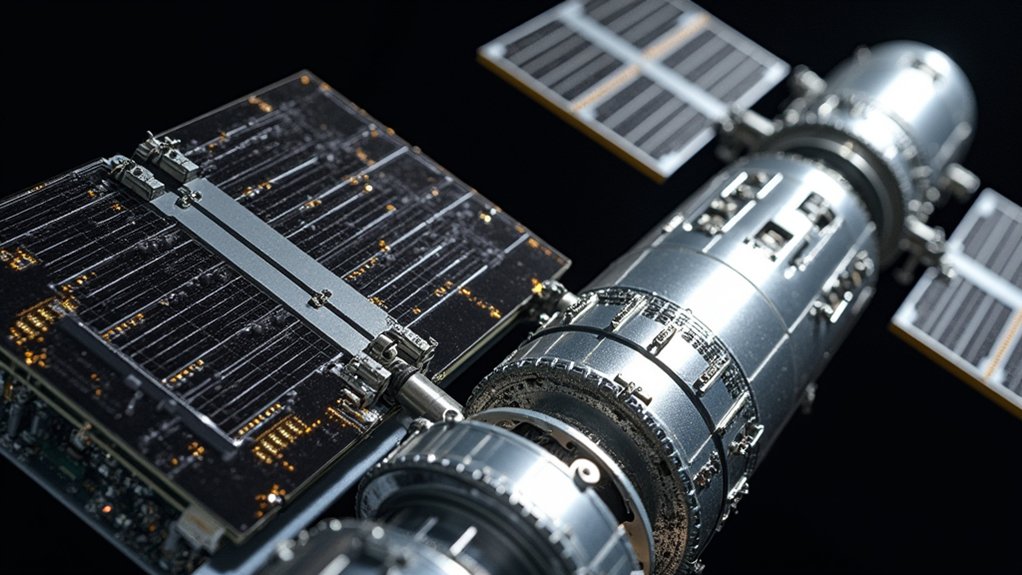
While modern space exploration pushes technological boundaries, we can’t underestimate the critical role that silver plays in aerospace components. From essential electrical conductivity in circuitry to enhanced solar panel efficiency, silver’s versatility makes it indispensable in spacecraft construction. Optical solar reflectors provide crucial thermal control in space equipment.
We’re seeing its impact across multiple applications, including thermal management systems that protect sensitive equipment from extreme temperature fluctuations. However, silver’s use in space is somewhat limited due to its tendency for rapid oxidization in the presence of atomic oxygen.
What’s particularly impressive is silver’s dual functionality in space environments. It serves as both a protective coating and performance enhancer, with electroplated surfaces providing corrosion resistance while improving electrical conductivity.
We’re also witnessing breakthroughs in silver-based technologies for life support systems, where it’s showing promise in oxygen recycling with efficiency rates reaching 92%.
In aerospace, silver isn’t just a precious metal – it’s a critical engineering solution.
Environmental Solutions: Water Treatment and Sustainability
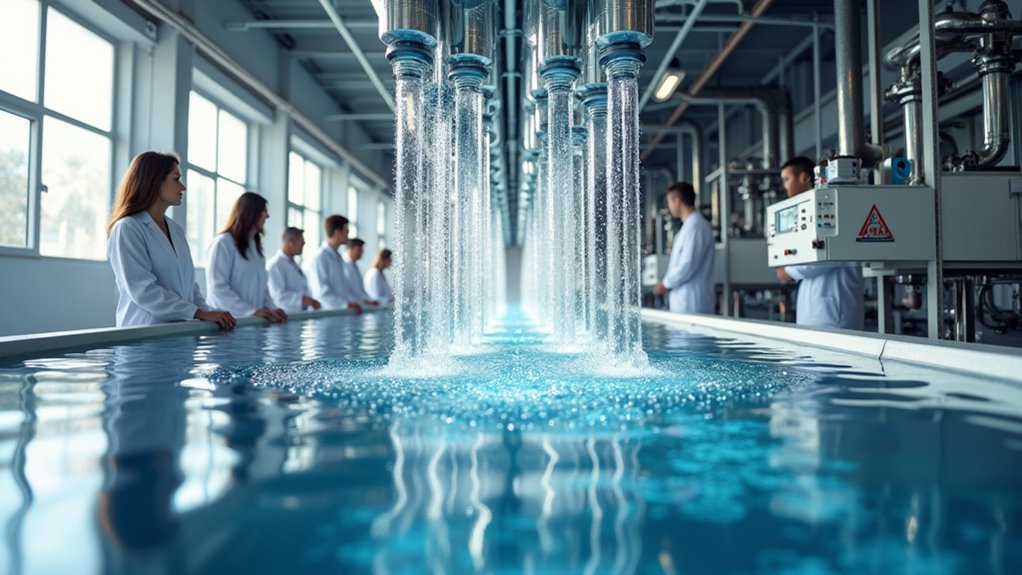
Let’s examine how silver’s remarkable antimicrobial properties make it an invaluable asset in today’s water treatment systems, particularly through nanoparticle applications that target harmful bacteria while maintaining safety standards.
We’re seeing breakthrough developments in silver-enhanced filtration technologies that provide communities with sustainable access to clean water, especially in regions lacking centralized treatment infrastructure.
The integration of silver nanoparticles into point-of-use devices represents a powerful intersection of environmental responsibility and public health, as these systems deliver effective purification while minimizing ecological impact through controlled silver release mechanisms.
Silver’s Water Filtration Benefits
The remarkable antimicrobial properties of silver-based water filtration systems have revolutionized how we protect and purify our water supplies.
Through silver ionization technology and antimicrobial silver integration, we’re now able to eliminate over 650 types of harmful microorganisms while preventing recontamination between service intervals.
Let’s examine why silver filtration delivers superior water protection:
- Silver ions actively disrupt bacterial DNA replication and respiration, stopping microbial growth
- Silver-impregnated media extends filter life by preventing bacterial degradation
- Combined silver-copper systems reduce chlorine requirements and energy costs
- Active ionization prevents biofilm formation in tanks and pipes
We’re seeing widespread adoption of silver filtration technologies in household and community systems, proving particularly valuable in regions with limited access to clean water.
These innovations align perfectly with global sustainability goals while maintaining consistently safe drinking water.
Eco-Friendly Treatment Systems
As environmental concerns drive innovation in water treatment, silver-based technologies have emerged as powerful tools for sustainable waste management and resource recovery.
We’re seeing innovative recycling methods that can extract up to 99% of silver from wastewater streams, transforming what was once considered waste into valuable resources.
Our sustainable technologies now include advanced electrochemical treatments and emerging solutions like the ElectraMet process, which effectively recovers silver from dilute industrial waste.
We’re particularly excited about silver nanoparticles’ role in environmental remediation – they’re excellent at breaking down pesticides and dyes through photocatalysis.
By 2025, we’ll be producing around 800 tonnes of these nanoparticles annually, revolutionizing how we clean our water.
These solutions don’t just protect our environment; they create a circular economy where silver recovery supports both sustainability and profitability.
Sustainable Purification Solutions
Modern water purification demands innovative solutions that balance effectiveness with environmental responsibility. We’re seeing remarkable advances in sustainable technologies through silver-based purification innovations that transform how we treat water. These developments merge proven antimicrobial properties with eco-conscious design principles.
- Silver ionization systems provide long-lasting disinfection without chemical additives
- Hybrid nanoparticle solutions enable pollution monitoring and remediation
- NASA-derived technologies reduce dependence on harmful chlorine treatments
- AgNP-enhanced ceramic filters deliver superior performance using recycled materials
Our sustainable purification methods now combine silver’s natural antimicrobial power with green manufacturing processes. This integration creates water treatment systems that are both highly effective and environmentally responsible, marking a significant advancement in clean water technology.
Market Dynamics: Supply Constraints and Production Challenges

While global silver supply shows signs of growth, reaching projected highs of 1.05 billion ounces by 2025, persistent structural deficits continue to plague the market.
We’re seeing supply challenges intensify as cumulative shortfalls exceed 678 million ounces since 2021, with deficits expected to nearly double to 265 million ounces in 2024.
Production hurdles stem from several key factors we can’t ignore.
About 70% of silver comes as a by-product of other metal mining, limiting supply responsiveness to market demands.
Add to this the declining ore grades, lengthy mine development timelines of 7-10 years, and increasing environmental regulations – and we’ve got a perfect storm of constraints.
These factors create significant barriers for new production, especially considering the $1,300/oz all-in sustaining costs that challenge profitability.
The current 117.6-million-ounce deficit reflects a significant market imbalance that creates compelling investment opportunities in the silver sector.
Investment Landscape: Price Trends and Strategic Opportunities

Since reaching historic highs in 2025, silver’s investment landscape has transformed into a compelling opportunity for strategic positioning.
We’re seeing surges beyond $35 per ounce driven by industrial demand and shrinking inventories, creating an environment ripe for implementing targeted investment strategies.
Key market dynamics we’ve identified for investors:
- Price volatility presents tactical buying windows during macroeconomic pullbacks
- Gold-silver ratio of 92:1 suggests significant upside potential as it contracts
- Industrial consumption growth of 7% annually supports sustained price momentum
- Supply deficits paired with safe-haven demand create long-term appreciation potential
Similar to the Hunt brothers’ manipulation in 1979-1980, modern price movements continue to demonstrate silver’s vulnerability to market speculation and economic shocks.
We recommend diversifying precious metals portfolios through regulated dealers with certified storage solutions.
This approach helps capitalize on silver’s structural deficits while managing investment risks during periods of market volatility.
People Also Ask
How Does Recycled Silver Quality Compare to Newly Mined Silver?
We can assure you that recycled silver maintains identical quality to newly mined silver, as it retains 92.5% purity through melting and reprocessing, with no degradation in its chemical or physical properties.
Can Alternative Materials Replace Silver in Emerging Technologies?
We can’t fully replace silver in emerging technologies yet. While some silver substitutes exist, they don’t match silver’s unique conductivity and performance needed for critical technological innovations in electronics and renewable energy.
What Impact Do Geopolitical Tensions Have on Silver Supply Chains?
Through tariffs and tensions, through sanctions and strife, we’re seeing major supply disruptions worldwide. Trade agreements are crumbling, pushing silver prices up and fragmenting traditional supply chains.
How Do Seasonal Changes Affect Industrial Silver Demand Patterns?
We see lower summer trends in silver demand due to manufacturing slowdowns, while winter demand typically rises with electronics production and year-end investment buying in Western markets.
Does Silver Production Contribute Significantly to Environmental Degradation?
We see, feel, and experience how silver mining devastates our environment through extensive habitat destruction, toxic chemical pollution, and widespread contamination of water sources, causing significant long-term environmental impact on ecosystems.
The Bottom Line
As supply constraints tighten and industrial demand skyrockets, smart investors should position themselves strategically. The metal’s unique properties make it irreplaceable in tomorrow’s innovations, suggesting strong long-term value creation opportunities. BlokGold, the leading precious metals exchange specialist, offers an efficient solution for those looking to buy real precious metals with cryptocurrency. Through BlokGold’s cutting-edge platform, investors can access physical precious metals immediately, eliminating financial risk and the need to wait for future market opportunities or make expensive commitments with traditional dealers. With BlokGold, precious metals purchasing has never been more accessible and secure.
References
- https://www.gainesvillecoins.com/blog/industrial-demand-silver-investors-2025
- https://www.cruxinvestor.com/posts/surging-industrial-demand-tightens-silver-supply-triggering-strategic-repricing-in-2025
- https://sprott.com/insights/silver-investment-outlook-mid-year-2025/
- https://silverinstitute.org/wp-content/uploads/2025/04/World_Silver_Survey-2025.pdf
- https://www.wisdomtree.eu/-/media/eu-media-files/other-documents/research/market-outlook/wisdomtree-silver-outlook-q3-2025.pdf?sc_lang=en-gb
- https://goldsilver.com/industry-news/article/silver-price-forecast-2025-42-oz-milestone-45-ytd-gains/
- https://www.xs.com/en/blog/silver-price-prediction/
- https://www.deloitte.com/us/en/insights/topics/innovation/quantum-computing-business-applications.html
- https://blog.colobridge.net/en/2025/05/applications-of-quantum-computing-en/
- https://pages.stat.wisc.edu/~yzwang/paper/quantum-ARSIA.pdf