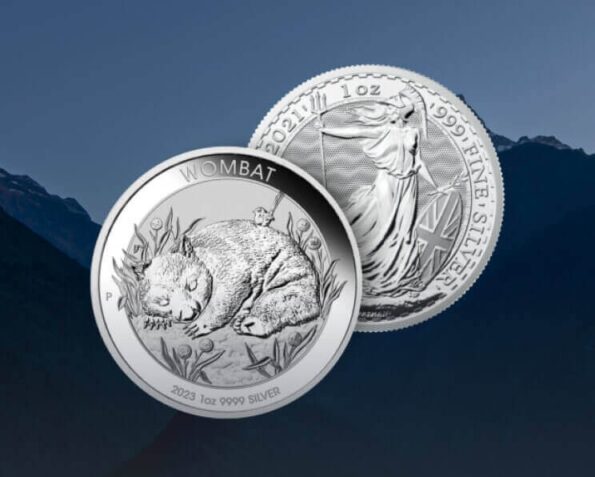

We’re witnessing an unprecedented warning in the gold markets as prices shatter records above $3,000 in 2025, with 28 new highs signaling severe distress in our global financial system. Central banks’ aggressive accumulation of over 1,000 tons of gold in 2024 reveals their diminishing faith in fiat currencies, while massive sovereign debt and currency debasement fuel the precious metal’s rise. The stark reality of our monetary system’s fragility becomes clearer as we examine the evidence.
The Golden Surge: Record Prices Signal Currency Crisis

Every significant indicator in the gold market points to an unprecedented crisis of confidence in global currencies.
We’re witnessing gold investment surge to staggering heights, with prices smashing through $3,000 in March 2025 and rocketing beyond $3,778 by September. The numbers tell a stark story – 28 record highs this year alone, including 16 above the $3,000 mark. Recent projections from Trading Economics suggest prices will reach $3,561.44 by mid-2026.
Central banks worldwide have collectively acquired over 1,000 tons of gold in 2024, reflecting growing distrust in traditional reserve currencies.
Unlike silver’s dramatic price volatility, gold’s steady upward trajectory has made it the premier safe-haven asset during this monetary crisis.
Let’s be clear about what we’re seeing: When gold jumps 31% in nine months after a 27% gain the previous year, it’s not just another bull market.
These aren’t normal fluctuations – they’re warning signs. Investors are desperately seeking currency alternatives, driving the fastest flight to precious metals in modern history.
The message couldn’t be clearer – the global monetary system is under severe stress.
Bernanke’s Legacy: From Helicopter Money to Market Mayhem

Let’s examine Ben Bernanke’s revolutionary “helicopter money” theory, which emerged from his radical 2003 proposal to combat Japan’s deflation through direct monetary transfers to citizens.
We can trace how this unconventional framework, though never fully implemented, fundamentally altered central banking discussions by introducing the concept of permanent monetary base expansion without asset purchases. While viewed as a last resort option, helicopter money remains an extreme policy tool that central banks have yet to deploy.
The fiscal implications of such policies continue to raise concerns about government debt servicing and coordination between monetary and fiscal authorities. The core PCE inflation projections of 3.6% by July 2025 demonstrate the lasting impact of experimental monetary policies. Bernanke’s legacy lives on as markets still grapple with the implications of his theoretical monetary “nuclear option,” which continues to influence debates over the boundaries between fiscal and monetary policy.
Helicopter Theory Origins Explained
Before Ben Bernanke became known as the Federal Reserve chairman who navigated the 2008 financial crisis, Milton Friedman laid the theoretical groundwork for what we now call “helicopter money” in his 1969 paper “The Optimum Quantity of Money.” Friedman’s original concept was brilliantly simple – imagine helicopters dropping $1,000 bills from the sky as a one-time event to demonstrate why governments shouldn’t let deflation take hold.
These helicopter economic principles revolutionized how we think about monetary intervention.
When Bernanke later expanded on Friedman’s work, he proposed more practical applications through monetary-financed tax cuts and direct central bank purchases of government debt.
The monetary policy implications were clear: permanent money supply increases, properly communicated to the public, could theoretically prevent deflation and stimulate economic growth during severe downturns.
Market Impact Still Reverberates
While Bernanke’s helicopter money theories initially promised economic salvation, their implementation has left lasting distortions across financial markets that we’re still grappling with today.
The direct money distribution approach marked a dramatic shift from traditional monetary policy tools as central banks sought new ways to stimulate economies.
The policy’s most dramatic impact manifested in asset price inflation, creating a stark divide between Wall Street and Main Street.
We’ve witnessed unprecedented wealth concentration as monetary expansion drove up stocks, real estate, and fine art values – assets primarily held by the affluent.
This policy approach gained prominence especially when central bank options became limited in near-zero interest rate environments.
This distortion has sparked renewed interest in gold speculation and inflation hedging strategies among investors seeking protection from currency debasement.
The traditional inflation metrics failed to capture this dynamic, but the surge in luxury goods prices tells the real story.
What started as an academic theory has transformed into a cautionary tale about unintended consequences in our financial markets.
Austrian Economics and the Gold Price Prophecy

The Austrian School of economics provides a compelling framework for understanding gold’s enduring monetary role throughout history.
Let’s examine how Austrian Theory shapes the Gold Discourse by focusing on key principles that explain gold’s monetary significance.
- Gold emerged naturally as money through free market forces, not government decree – a stark contrast to today’s artificial fiat currencies.
- Unlike paper money that can be printed at will, gold’s supply remains constrained by physical mining requirements.
- Gold serves as humanity’s most reliable inflation hedge, maintaining purchasing power across generations.
- The current fiat system, existing only since 1971, represents a brief experiment compared to gold’s millennia-long monetary history.
We’re witnessing these Austrian principles play out as gold prices reflect growing concerns about currency debasement and monetary instability.
The methodological individualism approach helps explain why people naturally gravitate toward gold as a store of value during uncertain times.
During major market crashes, historical patterns show gold preserving wealth while stocks experience devastating losses.
Gold’s fungible nature ensures its consistent value and tradability across different markets and regions.
Central Bank Policy: The Path to Currency Destruction

Austrian economic principles reveal gold’s enduring value, but central bank policies actively undermine currency stability through coordinated manipulation.
We’re witnessing this destruction through multiple channels: interest rate suppression drives capital flight, quantitative easing dilutes purchasing power, and direct foreign exchange intervention distorts market prices.
Central bank stockpiling of over 1,000 tonnes of gold annually signals growing distrust in fiat currencies.
Let’s be clear – when central banks target 2% inflation while simultaneously expanding the money supply through QE, they’re orchestrating a deliberate erosion of currency value.
The transmission mechanisms are complex, but the outcome is predictable: weaker currencies and diminished purchasing power.
While monetary policy operates through intricate channels, the results remain constant: deteriorating currency values and falling consumer purchasing power.
Through near-zero interest rates and massive bond purchases, monetary policy has created a self-reinforcing cycle of currency debasement.
The evidence is undeniable – central bank actions systematically destroy the very stability they claim to protect. Their primary tool of Open Market Operations directly influences money supply levels by purchasing or selling government securities in financial markets.
Central bank transparency scores ranging from 0 to 15 demonstrate how policy clarity correlates with currency movements, further exposing their deliberate manipulation of financial markets.
Measuring Real Wealth Through Gold Standards

We’ve long used gold’s historical pricing patterns as our most reliable window into real currency values and wealth preservation.
Looking at Sir Isaac Newton’s 1717 standardization of the gold guinea at 21 silver shillings, we can trace how gold maintained consistent purchasing power while paper currencies deteriorated.
The classical gold standard era of 1880-1914 proves especially instructive, as it delivered unprecedented economic growth and price stability through fixed currency-to-gold ratios that prevented government debasement.
Modern portfolio analysis shows that gold’s near-zero correlation with traditional assets since 1969 reinforces its historical role as a hedge against currency instability.
Historical Gold Price Patterns
Gold’s price stability during the pre-1971 gold standard era provides a fascinating window into how wealth was once measured with remarkable consistency.
Let’s examine the striking contrast between historical price changes and today’s volatile markets:
- From 1792 to 1973, gold traded in an ultra-narrow range between $19.75 and $42.22 per ounce – a reflection of the discipline of monetary policy.
- The $35 per ounce fixed rate established in 1934 anchored global finance for nearly 40 years.
- Post-1971 abandonment of the gold standard triggered an immediate surge from $42.22 to $70.
- Today’s price of $3,778.12 represents a staggering 8,850% increase from the last official gold standard rate.
We can’t help but notice how this stark price progression serves as a measuring stick for currency debasement over the past five decades.
Modern Currency Value Analysis
The stark rise in gold prices since 1971 compels us to examine how modern currencies measure real wealth in today’s complex financial landscape. We can’t rely on simplistic currency valuation metrics anymore – we must understand how real exchange rates and purchasing power truly work.
Let’s be clear: modern currency values depend heavily on interest rate differentials and central bank policies. When we examine tools like the Big Mac Index and Real Effective Exchange Rates (REER), we see how currencies deviate from their theoretical equilibrium values.
These deviations aren’t just academic – they affect every dollar, euro, or yen in your pocket.
We’re now in an era where currency manipulation through interest rates and market intervention has become standard practice. That’s precisely why gold serves as our canary in the coal mine.
Global Currency Devaluation: A Race to the Bottom

While global markets grapple with unprecedented volatility, we’re witnessing a dramatic race to the bottom in currency values that’s reshaping the financial landscape.
The currency competition between major economies has intensified, with depreciation dynamics creating a self-reinforcing cycle of devaluation.
Let’s examine the key indicators of this systemic decline:
- The US Dollar Index has plummeted 7.3% in 2025, marking its weakest first-half performance since 1980.
- The Euro has surged 10.2% against the USD, leading a broad-based currency realignment.
- Emerging market currencies have gained 10.3% over four quarters through December 2024.
- Central bank policy divergence has accelerated the devaluation cycle, with the Fed and ECB moving in opposite directions.
This coordinated weakening threatens global financial stability and demands our immediate attention.
Investors seeking protection against this currency crisis are increasingly turning to Bitcoin and gold as complementary assets that provide both stability and growth potential during market uncertainty.
The Sovereign Debt Time Bomb

We’re witnessing an unprecedented explosion in global sovereign debt, with total obligations now surpassing $251 trillion and public debt alone reaching $102 trillion.
The stark reality shows advanced economies leading this dangerous trend, as the U.S. government debt hits 121% of GDP while other nations scramble to manage their own spiraling obligations.
Bond markets have started flashing warning signals, with record sovereign issuance projected at $17 trillion for 2025, suggesting we’re approaching a critical inflection point in the global debt cycle.
Debt Ratios Reach Extremes
Dramatic increases in sovereign debt ratios have created an unprecedented global time bomb that we can’t ignore. With total global debt surpassing $251 trillion and debt-to-GDP ratios reaching extremes, we’re facing serious debt sustainability concerns and fiscal policy implications that threaten global stability.
Let’s examine the most alarming debt metrics:
- Global public debt has crossed $100 trillion for the first time in history.
- Japan’s debt burden towers at 235-256% of GDP, leading developed nations.
- Advanced economies average 110% debt-to-GDP versus 74% for emerging markets.
- Public debt could hit 100% of global GDP by 2030.
These numbers aren’t just statistics – they’re warning signs. The combination of rising geopolitical tensions and aging populations means we’re racing toward a fiscal cliff that could trigger widespread financial instability.
Bond Markets Signal Trouble
The bond market’s warning signals now amplify our debt sustainability concerns.
We’re seeing ultra-long bond yields surge across major economies, with the US 30-year Treasury jumping 0.7% to 5% and Japan’s 40-year yield climbing 0.8% to 3.4%.
These aren’t just numbers – they’re flashing red alerts.
Bond yield trends tell us investors demand higher compensation for fiscal sustainability risks.
The term premium on 10-year US Treasuries has swung from negative to +0.8%, while credit markets tighten despite record issuance.
We’re watching a remarkable divergence in performance, with German and Canadian bonds outperforming US Treasuries.
When bond markets speak this loudly, we’d better listen.
The message is clear: sovereign debt levels have reached a critical juncture, and the markets are pricing in trouble ahead.
Money Printing and the Death of Purchasing Power

Since the Federal Reserve began flooding the system with money in 2019, we’ve witnessed an unprecedented expansion of the U.S. money supply that’s eroding purchasing power at an alarming rate.
The numbers tell a sobering story about the destruction of our currency’s value.
Let’s examine the stark reality:
- Over 30% of all dollars in circulation were created in just 30 months
- The Fed printed $6.72 trillion between August 2019 and January 2022
- Money supply ballooned from $14.9 trillion to $21.6 trillion
- Inflation hit a 41-year high of 8.5% in March 2022
We’re living through one of the most aggressive monetary expansions in U.S. history.
History shows us that when central banks print money with abandon, purchasing power inevitably dies – just ask Zimbabwe or Weimar Germany.
These warning signs mirror the rapid credit expansion patterns that preceded major currency collapses throughout history.
Gold’s Warning: The End of Fiat Currency Dominance

Rising inflation and monetary expansion tell only part of today’s economic story – gold’s meteoric price action sends an even more ominous warning about our financial system’s future.
The evidence is clear: gold market trends since 1971 reveal the systematic collapse of fiat currency purchasing power. We’ve watched every major currency plummet against gold, with the Euro falling 356% since 1999 alone.
The warning signs are flashing red. When European nations converted over $1 billion to gold in 1971, they triggered the end of Bretton Woods – and today’s $300 trillion global debt bubble signals we’re approaching another breaking point.
Currency instability is no longer a theoretical concern but a present reality. As central banks frantically accumulate gold reserves, we’re witnessing the death throes of pure fiat dominance.
Modern investors increasingly recognize this reality, with high-net-worth investors now allocating 25% of their portfolios to a combination of gold and cryptocurrency assets.
Physical Gold Vs Paper Promises

While gold’s enduring value spans millennia, modern investors must navigate a pivotal choice between physical gold ownership and paper gold derivatives. We’re witnessing a stark disparity between physical security and trading accessibility in today’s markets.
- Physical gold offers unmatched asset tangibility and ownership control, eliminating counterparty risk through direct possession.
- Paper gold provides superior liquidity and trading accessibility, though at the cost of depending on financial intermediaries.
- The massive paper gold market ($200-300 trillion) dwarfs physical gold ($11 trillion), creating potential market volatility risks.
- Investment strategy must balance liquidity challenges of physical gold against the value stability it provides as an inflation hedge.
In this environment of financial uncertainty, understanding these distinctions becomes essential for protecting wealth through strategic allocation.
Investors seeking optimal tax efficiency should consider holding physical gold in tax-advantaged accounts to preserve wealth during inflationary periods while minimizing taxable events.
Preserving Wealth in an Era of Monetary Collapse

The stark realities of modern monetary fragility demand an all-encompassing wealth preservation strategy. We’re seeing unprecedented banking vulnerabilities and monetary warning signs that require immediate action through strategic asset diversification and wealth protection measures.
| Protection Strategy | Implementation |
|---|---|
| Physical Assets | Gold, silver, real estate |
| Banking Security | Multi-bank deposits under FDIC limits |
| Alternative Investments | Private equity, venture capital |
| International Exposure | Foreign currencies, overseas real estate |
Let’s be clear: traditional financial structures aren’t providing adequate security anymore. We’re witnessing the erosion of purchasing power while national debt skyrockets past $36.8 trillion. That’s why we’re focusing on tangible assets, strategic metals allocation, and international diversification. It’s not just about preserving wealth – it’s about ensuring our financial sovereignty in an increasingly unstable monetary system. The rise of programmable digital currencies threatens individual financial autonomy as governments gain unprecedented control over spending and transactions through CBDCs.
People Also Ask
How Do Countries Maintain Gold Reserves Without Physically Storing the Metal?
We can keep gold storage through custodial arrangements with foreign central banks, maintaining digital reserves and electronic trading capabilities while securing our metal in trusted international vaults with institutional-grade protection.
What Triggers Central Banks to Suddenly Increase Their Gold Holdings?
Like squirrels hoarding nuts before winter, we’ve seen central bank strategies trigger gold accumulation during geopolitical tensions, economic uncertainty, sanctions threats, and when they’re actively reducing dependence on the U.S. dollar.
Can Governments Confiscate Private Gold Holdings During Economic Emergencies?
Yes, we’ve seen governments can legally seize private gold during economic crises, as proven by the U.S. 1933 confiscation. Government policies allowing such actions typically remain on law books for future emergencies.
How Do Gold ETFS Differ From Owning Physical Gold Bullion?
Like night and day, gold ETFs and physical bullion differ fundamentally. We’ll find ETF advantages in easy trading and storage, while physical gold investment strategies offer direct ownership without counterparty risks.
Why Don’t Major Currencies Return to a Gold Standard System?
We don’t return to a gold standard because it limits our ability to respond to economic crises, requires difficult international coordination, and restricts currency stability through flexible monetary policy during emergencies.
The Bottom Line
We’re witnessing gold’s meteoric rise to heights that would make King Midas blush, signaling a critical warning about our financial system’s stability. As central banks continue their reckless money printing, physical gold remains our strongest defense against currency devaluation. We must recognize these record prices as more than just market movements – they’re flashing warning signs of systemic failure. It’s time to seriously consider gold’s role in preserving our wealth, which is why leading precious metals exchange specialist BlokGold provides immediate access to physical precious metals through cutting-edge crypto precious metals exchange today rather than waiting for future market opportunities or making expensive traditional dealer commitments. With BlokGold, you can buy real precious metals like physical gold and silver with cryptocurrency, eliminating financial risk and providing access to cutting-edge precious metals purchasing.
References
- https://creditwritedowns.com/2010/12/parsing-helicopter-speech.html
- https://www.interest.co.nz/news/45319/opinion-bernanke-uncovered-buy-gold
- https://www.cato.org/cato-journal/winter-2018/against-helicopter-money
- https://www.federalreserve.gov/boarddocs/Speeches/2002/20021121/default.htm
- https://www.brookings.edu/articles/what-tools-does-the-fed-have-left-part-3-helicopter-money/
- https://www.federalreserve.gov/boarddocs/speeches/2002/20021015/default.htm
- https://fraser.stlouisfed.org/title/statements-speeches-ben-s-bernanke-453/deflation-making-sure-doesn-t-happen-8874?page=17
- https://valaurum.com/blogs/news/gold-prices-reaching-record-high-levels
- https://tradingeconomics.com/commodity/gold
- https://www.gold.org/goldhub/research/gold-demand-trends/gold-demand-trends-q1-2025